How is the house valued in a California divorce, and as of what date?
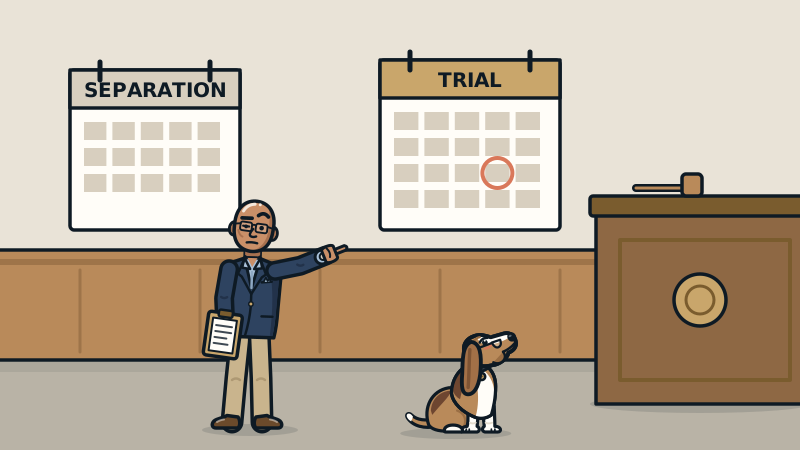
In a California divorce, the court generally values the house as near as practicable to the time of trial, not the date of separation. On 30 days' notice and for good cause, the court can use an alternate date between separation and trial. The value usually comes from an appraisal based on comparable sales.
California splits the community estate equally
California is a community property state. Family Code section 2550 says that unless the spouses agree otherwise in writing or by a stipulation in open court, the court divides the community estate equally.
Equal is easy with a bank account. You split it down the middle and nobody has to argue about whether the checking account has a nice view. A house is different. You cannot hand each spouse half a kitchen.
So the house usually gets a number. One spouse buys out the other at that number, or the house sells and the proceeds get divided. Either way, the value drives real money. If the house is worth $100,000 more than someone thinks, half of that difference just changed hands.
That is why the two questions that matter most are how the house is valued and as of what date. They sound boring. They are not boring when it is your equity.
The default date is close to trial
Family Code section 2552(a) says the court values assets and liabilities as near as practicable to the time of trial. That is the default.
A lot of people are surprised by this. They assume the value locks in the day they moved out. It does not, at least not automatically. If the market rose for two years while the case dragged on, the default rule picks up that rise. If it fell, the default picks up that too.
Here is what that means in practice. An appraisal done early in the case can go stale by the time of trial. Family law cases are not famous for moving fast. Some cases last long enough for the market to change its mind twice, and for the kids to learn to drive.
If your case is heading to trial, ask your attorney whether an updated appraisal will be needed closer to the trial date. Planning for that up front is cheaper than scrambling later.
When the court can pick a different date
Section 2552(b) gives the court another option. On 30 days' notice by the party asking for it, the court may, for good cause, value all or part of the assets and liabilities as of a date after separation and before trial. The goal is to divide the community estate equally in a fair way.
When the court picks an earlier date, the appraisal often has to look backward. That is called a retrospective appraisal: a value as of a past date, built from sales that happened around that date and the condition of the house back then.
The date of separation is its own legal question. Family Code section 70 defines it as the date a complete and final break in the marriage occurred, shown by one spouse telling the other they intend to end the marriage and acting in a way that matches that intent. The court considers all relevant evidence.
Notice that the date of separation and the valuation date are two different things. They can be the same if the court orders it, but nobody should assume it. This is general information only. Your rights and the procedure depend on your facts, so confirm with a California family law attorney.
How the appraiser actually values the house
Whatever date the court uses, the method is the same. I find sales of similar homes near that date, adjust for the differences, and reconcile to a value. Adjustments should be measured from real sales in that market, not from a rule of thumb someone's cousin heard at a barbecue.
Here is what I see in the field. Each spouse often has a favorite number, and it usually matches what they need the house to be worth. The one keeping the house wants it low. The one moving out wants it high. The market does not care about either of them.
That is why a divorce appraisal should teach the market. The number matters, but so does the trail of evidence behind it. A judge, a mediator or the other attorney should be able to follow the comps, see why each adjustment was made, and check it. If they can't, the number is just an opinion wearing a tie.
Condition matters a lot here. If one spouse has been living in the house and stopped maintaining it, or remodeled it after separation, the appraisal has to describe the condition as of the valuation date. That can be tricky, and it is one more reason to document the house early.
What to do if you are dividing a house
- Ask your attorney which date matters. Is the court likely to use the default near trial, or will someone ask for an alternate date?
- Photograph the house now. Date the photos. If a retrospective value is needed later, those photos are gold.
- Keep a list of work done after separation, with dates and receipts, and who paid for it.
- Consider one neutral appraiser both sides agree on, if your attorneys think it fits. Two dueling appraisals cost twice as much and often end in a third.
- Plan for an update if the case may run long, since the default value is near trial.
- Ask for the full report, not a one-page value letter. You want to see the sales and the reasoning.
Key takeaways
- California divides the community estate equally unless the spouses agree otherwise.
- The default valuation date is as near as practicable to trial, not the date of separation.
- The court can use an alternate date for good cause on 30 days' notice.
- A value as of a past date takes a retrospective appraisal, so document the house early.
People also ask
Is the house valued at the date of separation in California?
Not by default. The default is as near as practicable to trial. The court can choose an alternate date after separation and before trial for good cause.
Can one appraiser work for both spouses?
Yes, if both sides agree to it. A neutral appraiser hired jointly can save money and reduce fights over whose number is right.
What if the house value changes before trial?
Because the default date is near trial, an older appraisal may need an update. Ask your attorney when to order it.
Sources
Got a question we haven't answered?
Suggest a topic or ask your own appraisal question. The best ones become posts.