Who picks the appraiser in a divorce?
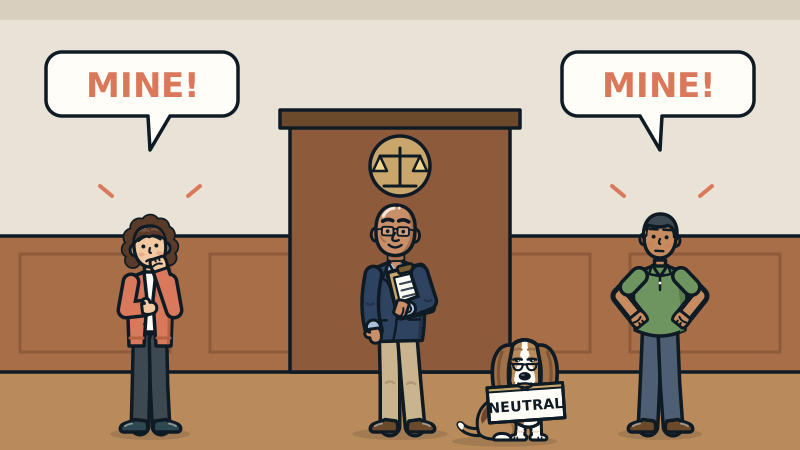
Usually the spouses do. In California they can agree on one appraiser, often through their attorneys or mediator, or each hire their own and let the judge weigh both. If needed, the court can appoint its own expert under Evidence Code 730 and set the fee. Either way, choose a licensed appraiser.
There are three common ways to choose
The California Courts self-help guide says spouses can reach an agreement about dividing property and ask the judge to approve it. If they cannot agree, a judge can decide at a hearing or trial. Choosing the appraiser follows the same pattern.
- One agreed appraiser. Both spouses, or their attorneys or mediator, pick one appraiser and agree to share the cost and the report.
- Each side hires its own. Two appraisers, two reports, and the judge or the negotiation sorts out the difference.
- A court appointed expert. Under Evidence Code 730, the court can appoint one or more experts on its own motion or when a party asks.
None of these is automatically right. The best choice depends on how much the spouses still trust each other, and whether "trust" is a word that can be said out loud in the room.
One agreed appraiser saves money and arguments
A single neutral appraiser is usually the cheapest and fastest path. One fee, one inspection, one report everyone works from. It also takes away the strange feeling of two professionals reaching different numbers for the same house.
It works best when the agreement is written down before the appraiser is hired. Settle these points first:
- Who the client is, and who receives the report
- Who pays, and in what shares
- The date the value should be as of (Family Code 2552 sets the default as near as practicable to trial)
- How the appraiser gets access to the house
- That both spouses may give the appraiser facts, such as permits, repairs and upgrades, in writing with copies to the other side
A neutral appraiser listens to both sides and takes direction from neither. Facts about the house are welcome. A target number is not.
Two appraisers means two reports and a judge
When each spouse hires an appraiser, the reports often land at different numbers. That does not mean someone is lying. Appraisers can choose different comparable sales, read the market trend differently, or rate condition differently.
What matters is which report holds up. A judge or a mediator is looking for the one that shows its work: the sales it used, why those sales, what each adjustment was, and where that adjustment came from. A report that says "in my opinion" and stops there is asking to be ignored.
I write my reports to be read by people who were not in the house. Every adjustment should come from what the market actually did, measured from real sales, not from a rule of thumb. When two reports disagree, the one built on more evidence usually wins the room.
Dueling appraisals cost more and can stretch the case. Sometimes they are worth it, especially when the house is unusual or the stakes are high.
When the court appoints the appraiser
Evidence Code 730 lets the court, at any time before or during trial, appoint one or more experts when expert evidence is or may be required. The court can do this on its own motion or on the motion of a party. The expert investigates, writes the report the court orders, and can testify at trial.
The court can also fix reasonable compensation for the expert's services. That takes the "who pays" fight out of the spouses' hands, which is either a relief or one more thing to be mad about.
Evidence Code 730 also says nothing in it lets a person perform any act that requires a license unless they hold that license. In plain words, being appointed by the court does not replace a license. In practice, that means choosing a California licensed appraiser for this work, whoever picks.
What I see in the field
In divorce work, the house usually has one spouse living in it and one spouse who has not been inside for months. That gap shapes everything. The spouse who left often remembers the house as it was on its best day. The spouse who stayed knows every drip, crack and sticky drawer.
My job is to describe the house as it actually is, and value it from what similar homes sold for. I rate condition from what I observe and what the records show, not from either spouse's description of it. Buyers in the markets I work react to condition more than to age, so this is where a lot of the value is decided.
I also keep communication even. If one side sends me a list of upgrades, the other side should see that list. If one side asks to talk, the other side should know the conversation happened. Nothing kills trust in a report faster than a feeling that the appraiser had a favorite. For the record, my favorite is the comparable sale that closed last month two doors down.
How to pick a good one, whoever picks
- Check the license with the California Bureau of Real Estate Appraisers before hiring.
- Ask about divorce and litigation experience, and whether the appraiser has testified.
- Ask for a sample report with private details removed. Look for comparable sales and explained adjustments, not a number with a few checkboxes.
- Ask how the market trend is measured. In a moving market, a recent and measured read beats a 12-month average.
- Confirm the valuation date the report will answer.
- Make sure the appraiser has no tie to either spouse or to the property.
This is general information. Your rights and procedure depend on the facts, so confirm with a California family law attorney.
Key takeaways
- Spouses can agree on one appraiser and ask the judge to approve their property agreement.
- Each side can also hire its own appraiser and let the judge weigh the reports.
- Under Evidence Code 730, the court can appoint an expert and fix the fee.
- A court appointment does not replace a license, so hire a licensed appraiser.
- The report that shows its evidence usually carries the most weight.
People also ask
Can one spouse refuse to let the appraiser inside?
That is a legal question for the attorneys or the court. The practical cost is that the appraiser may have to work from limited information, and the report will say so.
Who pays for the appraisal in a divorce?
Whatever the spouses agree to, often a 50/50 split. If the court appoints an expert under Evidence Code 730, the court can fix the compensation.
Can the appraiser talk to both spouses?
A neutral appraiser can receive facts about the property from both sides. Good practice is to share anything given in writing with the other side too.
Sources
Got a question we haven't answered?
Suggest a topic or ask your own appraisal question. The best ones become posts.