Does a messy house lower your appraisal?
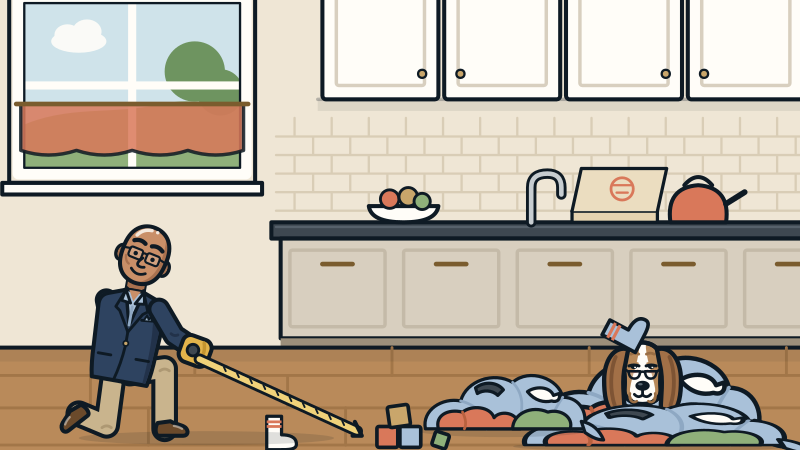
No. Clutter by itself does not lower an appraisal, because appraisers rate the condition of the house, not your housekeeping. But mess can hide damage, block access the appraiser needs, and make worn finishes look worse in the photos that go in the report.
Appraisers rate the house, not your laundry
I have walked into a lot of homes. Some smelled like fresh cookies. Some smelled like a teenage boy's gym bag that had been left in a hot car. Neither one changed the value.
An appraiser gives the house a condition rating from C1 (brand new) to C6 (serious problems). Fannie Mae's rules say that rating reflects the property as a whole, and it has to be based on facts the appraiser actually saw. Dishes in the sink are not a fact about the house. A soft spot in the floor under the dishes is.
So no, I am not knocking off $10,000 because your kid's Lego city covers the den. I am stepping over it, carefully, because those things hurt.
Where mess can actually cost you
Clutter becomes a problem in a few specific ways, and all of them are fixable. It becomes a problem when it gets in the way of the inspection. Fannie Mae requires the appraiser to inspect the accessible areas of the home. The key word is accessible.
- Blocked rooms or systems. If I can't get to the water heater, the electrical panel or the attic hatch, I can't confirm their condition. Some lenders will send the appraisal back with conditions, and that can slow your closing.
- Hidden damage. A pile of boxes against a wall can hide water stains. When an appraiser can't see a spot, they can't give it credit either.
- Bad photos. Interior photos go in the report. An underwriter who has never seen your house judges it partly from those pictures. A cluttered kitchen photo makes good counters look tired.
- Safety items. Problems that affect safety or soundness have to be reported, and the appraisal may be made subject to repair. Clutter blocking an exit or piled near a heater is the kind of thing that gets noticed.
What I look at when I walk through a home
Here is what actually moves a condition rating:
- The roof, foundation and visible structure
- Kitchens and bathrooms: age of updates, cabinets, counters, fixtures
- Flooring, walls and ceilings: stains, cracks, wear
- Windows, doors and the heating and cooling system
- Signs of water, pests or settlement
- Anything that is obviously deferred maintenance
Notice what is not on that list: your couch, your art, your collection of 47 decorative throw pillows. Personal property is not part of the real estate. I value the house you are selling, not the stuff you are taking with you.
I also measure the outside of the house and take photos of the front, the back, the street and every main room. If a bedroom is so full of boxes that I can't tell whether it has a window or a working light, I note what I could and could not see. Notes like that make underwriters ask questions, and questions add days to your escrow.
Why condition matters more than people think
In the markets I work, buyers react to condition more than to age. A 1962 ranch with a new kitchen and baths can sell for more than a 2004 house that still has the builder's original everything. That is why the condition line on an appraisal can carry real money.
The catch is that condition gets measured, not guessed. A good appraiser looks at what similar homes in each condition level actually sold for nearby, then adjusts. Your job is to make sure the true condition of your house is easy to see.
Does a spotless house ever raise the value?
Not directly. I have never written "smells like a candle store" on an adjustment grid. A clean house and a messy house with the same roof, kitchen, baths and floors get the same condition rating.
Where clean does help is in the sale itself. Buyers are human. A tidy house shows better, gets more showings, and can pull stronger offers. Those offers become the sales that future appraisals use as comparables, so in a roundabout way a neighborhood full of well-shown homes helps everyone.
For the appraisal, though, think of it this way: cleaning does not add value, but it removes doubt. When an appraiser can clearly see good floors, solid counters and a well-kept furnace, nothing has to be guessed. Guessing is where people get nervous, and nervous people round down.
Spend your energy on access and on the things that are real: fix the dripping faucet, replace the cracked outlet cover, clear the furnace closet. Then let the house speak for itself.
How to get ready in one afternoon
- Clear paths to the electrical panel, water heater, furnace, attic hatch and crawl space opening.
- Pick up the floors in every room so the flooring can be seen and measured around.
- Wipe the kitchen and bath counters. These rooms show up in photos and they carry the most weight in condition.
- Unlock everything: garage, side gates, sheds, any detached rooms.
- Put pets away. I like dogs. I do not like being herded into the pantry by one.
- Make a list of upgrades with dates and rough costs: roof, windows, kitchen, HVAC, permits. Hand it to the appraiser. Facts beat feelings.
Key takeaways
- Clutter alone does not lower an appraisal. Condition does.
- Mess that blocks access or hides damage can delay or hurt your appraisal.
- Interior photos go to the lender, so the kitchen and baths should look like themselves.
- Give the appraiser a list of upgrades with dates. It is the easiest way to make sure they get counted.
People also ask
Should I deep clean before an appraisal?
A basic tidy is enough. Focus on clear access to systems and clean kitchen and bath surfaces. A professional deep clean will not change the condition rating.
Does staging increase an appraisal?
Staging can help a house sell faster and for more, but the appraiser does not add value for furniture or decor. Value comes from the house and what similar homes sold for.
Can a bad smell lower an appraisal?
A smell that points to a real problem, like mold, pets damaging floors or water damage, can affect condition. A smell from last night's fish dinner will not.
Sources
Got a question we haven't answered?
Suggest a topic or ask your own appraisal question. The best ones become posts.