Does overpricing a house hurt the final sale price?
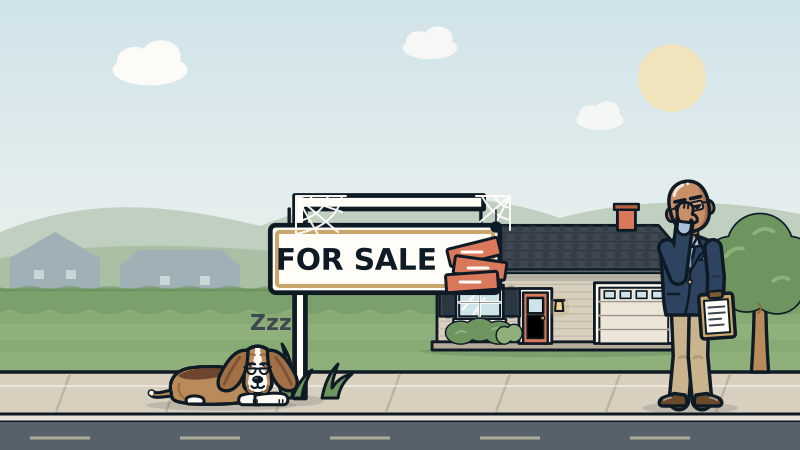
Often, yes. A 2016 Zillow study found that the longer a home sat on the market, the further below list price it sold. Homes on the market about two months sold about 5% under list, and homes on for 11 months sold about 12% under. Overpricing buys you time, and time on market tends to cost money.
What the data shows about homes that sit
Every overpriced listing starts with the same sentence: "We can always come down." True. You can. The problem is where you land when you do.
In a 2016 study, Zillow looked at homes listed over the course of a year and tracked how long they took to sell and how close they came to list price. The pattern was clear:
- Homes on the market about seven days typically sold at list price.
- Homes on the market about two months (56 days) sold about 5% below list.
- Homes on the market 11 months (324 days) typically sold about 12% below list.
After the first week, more time on the market generally meant a bigger gap between list and sale price.
To be fair to the data: a home can sit for reasons besides price. Bad photos, a busy street or a strange floor plan can slow things down too. But price is the one thing the seller controls on day one, and it is the thing that makes buyers skip the showing altogether.
Why a stale listing loses bargaining power
Buyers notice days on market. Their agents notice it even faster. A home that has been listed for two months starts to collect questions. What is wrong with it? Did a deal fall through? Will they take less?
Zillow's study described the cycle: overpricing leads to weeks or months of little activity, then price cuts, and the cuts can invite lowball offers. Each reduction tells buyers the seller is getting tired. Tired sellers get tested.
Zillow's chief economist, Skylar Olsen, said in mid-2024 that a growing segment of homes that are not competitively priced or well marketed were lingering on the market. Around then, Zillow reported that 24.5% of listings had a price cut in June 2024, the highest summer share since 2018.
By early 2026, cuts were still common. Redfin reported that 34.2% of sellers in February 2026 lowered their list price, the highest February share in its records going back to 2012.
An overpriced house is like an open house where everyone signs in and nobody comes back. You learn a lot about the cookies and nothing about the price.
Does underpricing work any better?
Not automatically. But first, one more number from that Zillow study, because it gets misread. Homes that sold 10% below list price stayed on the market about five times longer than homes that sold at list. A house that closes 10% under its asking price usually was not underpriced. It asked too much, sat, and got marked down. That is the overpricing story told from the closing table.
The goal is not high or low. The goal is accurate. A house priced where recent evidence says it should sell gets the most showings in its first weeks, which is when buyer attention is highest.
Some markets do run on strategic underpricing to spark multiple offers. Redfin's report on February 2026 noted that Bay Area sellers are known for underpricing their homes to fuel bidding wars, and San Francisco and San Jose had some of the lowest price-cut shares among big metros. That works when buyer demand is deep. In a slower segment, a low price can just mean selling low.
Overpricing can follow you into the appraisal
When a buyer's lender orders an appraisal, the appraiser reviews the listing history for the subject property. Fannie Mae's guidance asks appraisers to include fact-based comments about any current contract, offering or listing. A string of price cuts is part of that story.
Here is the thing many sellers miss: the contract price does not set value. One buyer agreeing to a number is one data point. If you finally get an offer near your original high price after months on the market, the appraisal still has to be supported by sales of similar homes. If the sales do not support it, the value will not be there, and you are back to negotiating.
I have appraised a lot of homes that sat. The house itself did not get worse while it sat. The pricing did not change its square footage or its kitchen. What changed was that buyers had months to compare it to everything else and decide what it was worth to them. The market had already voted.
The appraisal does not punish a seller for overpricing. It simply does not reward it either. The value comes from what similar homes sold for, adjusted for real differences, and a high asking price is not one of those differences.
How to price it right the first time
- Start with closed sales of similar homes nearby, from the most recent window your market can support. A 12-month average can hide a market that turned.
- Look at pendings and actives. Pending sales show where buyers are signing now. Active listings are your competition, and buyers will compare you to them on the same afternoon.
- Adjust for real differences. Condition, size, lot and location get measured from what buyers actually paid, not from rules of thumb.
- Check how close sale prices land to list prices for homes like yours. That tells you how much room buyers expect.
- Set a review date. Agree with your agent on what showings and feedback should look like by week two. If it is not happening, adjust early, before the listing gets stale.
- Get an independent opinion if family, pride or a neighbor's sale is pulling the number up. A pre-listing appraisal gives you evidence instead of hope.
Facts over feelings. The market does not care what you need. It cares what else is for sale.
Key takeaways
- Zillow found the list-to-sale gap widens the longer a home sits.
- Homes on the market about two months sold about 5% under list; 11 months, about 12%.
- Homes that sold 10% under list sat about five times longer than homes that sold at list.
- A contract price still has to be supported by sales at appraisal.
- Price accurately from recent local evidence and review early.
People also ask
How long should a house be on the market before a price drop?
It depends on your local pace. Compare your showings and offers to how fast similar homes are going pending right now, and adjust early if you are falling behind.
Do price reductions scare buyers away?
They can signal that a seller is motivated, which may bring lower offers. One well-timed adjustment usually hurts less than a series of small cuts over several months.
Can an appraiser see that my house was overpriced?
Yes. Appraisers review the subject's listing history, including price changes and days on market, and comment on current listings or contracts.
Sources
Got a question we haven't answered?
Suggest a topic or ask your own appraisal question. The best ones become posts.