Do you need handrails to pass an FHA appraisal?
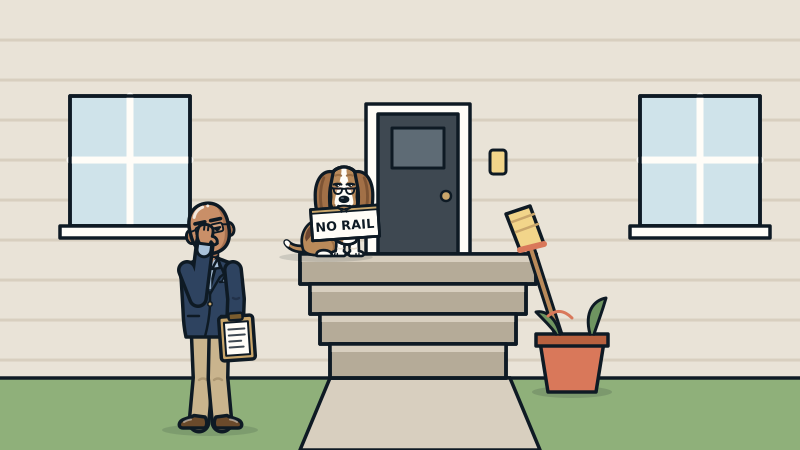
In practice, yes. Missing handrails on steps and stairways are one of the most common FHA repair calls, because FHA requires the home to be safe for the people living in it. The appraiser will usually make the appraisal subject to installing a handrail, and the repair has to be done before closing.
Why a missing handrail gets flagged
An FHA appraisal has two jobs. It gives a value, and it checks that the house meets HUD's property standards. Those standards are built around three ideas: the home has to be safe, sound and secure for the people who will live there.
A staircase with nothing to grab is a safety question. That is why lender and consumer guides treat handrails as a standard FHA item. NerdWallet's list of FHA requirements says "all steps must have a handrail," and Guaranteed Rate's guide to common FHA appraisal issues says that to comply with HUD safety standards, all steps and stairways must have handrails.
HUD's handbook does not hand appraisers a checklist of every possible repair. The appraiser has to judge whether a condition affects safety, soundness or security. A missing rail on a steep flight of basement stairs is about as easy as that judgment gets.
Keep in mind that handrails are rarely the only thing on the appraiser's mind. NerdWallet's list also covers intact steps, working locks and lighting, a sound foundation and paint that is not chipping or peeling. The appraiser walks the whole property, inside and out, and safety items anywhere on the lot count.
Where I see handrails missing most
Nobody forgets the handrail on the grand front staircase. It is always the other steps.
- Exterior entry steps. Three concrete steps up to the front door, no rail, and a flower pot standing in for one.
- Basement and garage stairs. Often built for function decades ago and never touched since.
- Deck and patio stairs. Especially on decks added later by a previous owner.
- Split-level half flights. Short runs that people stop seeing after a week of living there.
- Loose or broken rails. A rail that wobbles like a loose tooth is not really doing its job, and it can draw the same repair call.
If you have to warn every guest about the steps, the appraiser will probably notice them too.
How the repair works and who pays
When the appraiser flags a safety item, the report is usually completed "subject to" that repair. NerdWallet puts it plainly: before you can close on an FHA loan, you have to make any repairs flagged in the appraisal.
After the rail is installed, the lender typically needs proof. Often the appraiser comes back for a short final inspection with photos. That visit can carry its own fee and its own scheduling delay, which is why fixing it before the first appointment is smarter.
Who pays is a negotiation. NerdWallet notes that the buyer can pay for repairs or negotiate with the seller to cover them, and the seller can say no. A handrail is one of the cheaper repairs on the FHA list. It still gets argued about like it is a new roof, usually because it shows up late.
What HUD's 2026 proposal says about repairs
On September 22, 2026, HUD posted proposed revisions to the appraisal sections of Handbook 4000.1. According to McKissock's summary, repair conditions would be called only for conditions that affect "safety, security, soundness, marketability, or the health of its occupants." Cosmetic or minor deferred maintenance would be noted in the report but would not require a repair.
McKissock's summary does not mention handrails specifically. But stair safety sits squarely inside the safety category, so I would not expect the proposal to make missing rails disappear from FHA repair lists.
The proposal is not adopted. McKissock says there is no guarantee it will be, and HUD set the feedback deadline for November 6, 2026. Until HUD publishes a final version, the current handbook rules apply. Ask your lender which version governs your case.
What to do before the FHA appraisal
- Walk every set of steps on the property: front, back, side, basement, garage, deck, patio and any half flights inside.
- Install a sturdy rail anywhere there are steps without one. Anchor it into solid framing or masonry, never only drywall or trim.
- Fix loose rails. Tighten or replace anything that moves when you lean on it.
- Check local code. Your city or county sets height and size rules for rails, and some work needs a permit. A handyman who knows local code is worth the call.
- Take photos of the finished work and keep the receipt for the lender file.
- Agents: look at the steps when you write the offer. A five-minute walk then saves a two-week delay later.
What I see in the field
Handrails are a small item that can carry big emotion. Sellers hear "repair required" and think the appraiser is picking on the house. Buyers hear it and wonder what else is wrong.
Neither reaction fits. A missing handrail rarely says much about value. It says the house is missing a piece of safety equipment that FHA expects to see. I would much rather report a home with a freshly installed rail than write a repair condition two weeks before move-in day.
Agents ask me whether they should mention the missing rail in the listing or just fix it. Fix it. A rail installed before the appraisal is a non-event. A rail discovered by the appraiser is a condition, a reinspection and an extra round of emails between people who are already stressed about moving.
Facts over feelings works both ways. The rail does not lower the value of a good house, and adding one does not raise the value of a tired one. It just clears the path to closing, one step at a time.
Key takeaways
- Missing handrails are one of the most common FHA repair calls.
- FHA expects a home to be safe, sound and secure, and stair safety falls under safety.
- Flagged safety repairs must be completed before closing, usually with proof.
- Check the exterior, basement, garage and deck steps too, beyond the main staircase.
- HUD's 2026 proposal would narrow repair calls, but safety items would still qualify.
People also ask
Do conventional appraisals require handrails?
Conventional appraisals do not have FHA's property standards, but an appraiser still reports conditions that affect safety or soundness, and a lender can require a repair.
Does a missing handrail lower the appraised value?
Usually not in any meaningful way. It is treated as a repair condition, not a value adjustment. The value is still based on comparable sales.
Can the seller install the handrail after the appraisal?
Yes. That is the normal way a subject-to repair is cleared. The lender will usually want the repair verified, often with a final inspection and photos.
Sources
Got a question we haven't answered?
Suggest a topic or ask your own appraisal question. The best ones become posts.