What are the FHA appraisal requirements (minimum property requirements)?
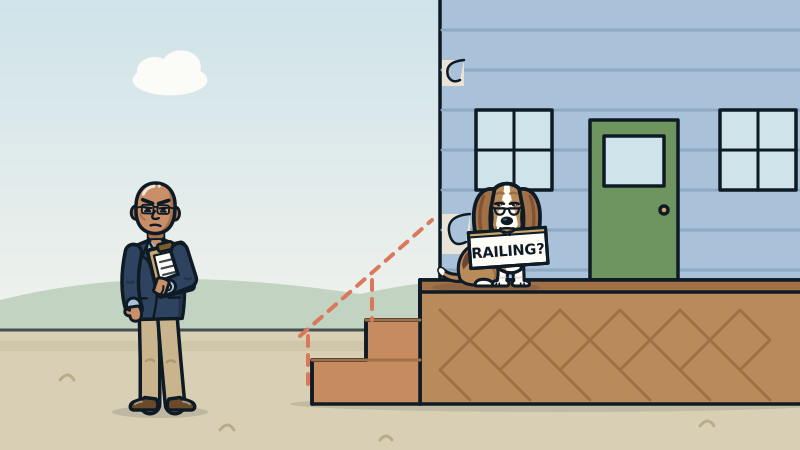
An FHA appraisal does two jobs. A state-certified appraiser on FHA's roster gives a market value, and also checks that the home meets HUD's minimum property requirements for safety, security and soundness. Items like peeling paint on older homes, missing handrails, broken windows or a roof near the end of its life usually have to be fixed before closing.
An FHA appraisal is a value and a safety check
On a conventional loan, the appraiser's main job is the value. On an FHA loan, the appraiser has a second job: making sure the house is safe to live in, secure, and structurally sound. HUD spells this out in Handbook 4000.1, and the shorthand is the minimum property requirements, or MPRs.
The appraiser has to be state certified and on FHA's appraiser roster. That roster is how HUD keeps track of who is allowed to do these reports.
None of this means the FHA appraiser is a home inspector. I am not testing every outlet or crawling every inch of the attic with a flashlight in my teeth. I am looking for visible problems that affect safety, security or soundness. A home inspection goes deeper, and FHA buyers should still get one.
Think of the FHA appraisal as a bouncer at the door. It is not checking whether the house has good taste. It is checking whether the house is going to fall on someone.
The value side works like any other appraisal. I pick comparable sales (similar homes that sold nearby), adjust for the differences the market actually pays for, and reconcile to one number. A repair condition does not mean the value is low. It means the lender wants the problem gone before it lends against the house.
That distinction matters. Sellers sometimes hear "subject to repairs" and think the appraiser trashed their home. Usually the number is fine. The handrail is the problem.
What usually gets flagged
These are the items that show up again and again in FHA reports:
- Peeling or chipping paint on homes built before 1978, because of the lead paint risk.
- Missing handrails on steps, and broken steps or walkways that are a trip hazard.
- Broken windows or doors, and locks that don't work.
- A roof that leaks or doesn't look like it has at least two years of life left.
- Termites or other active pests, and wood damage from them.
- Utilities that are off. Water, power and heat should be on so the systems can be checked. A permanent heat source is required.
- Water problems, like a wet basement or grading that sends rain toward the foundation.
- Attic and crawl space damage, mold or pests.
Air conditioning is not required. But if the house has it, it should work. A window unit held in place with a phone book is a conversation, not a feature.
Who fixes the problems, and when
When the appraiser calls for a repair, the report is made "subject to" that repair. The lender won't close until it is done and cleared, usually by the appraiser coming back to confirm the work.
Who pays is a negotiation. The seller may agree to fix things. The buyer may pay for it or ask for a price cut. If nobody budges, the buyer can walk away, depending on the contract. Read your contract and talk to your agent before the appraisal, not after.
In some cases, HUD allows a repair escrow, where money is set aside and the work is done after closing. HUD's rules require the home to be livable for that, and lenders often have their own limits. Ask your loan officer early if you think you'll need one.
One tip for sellers: if you're listing an older home and you expect FHA offers, scrape and paint the flaking trim before the house hits the market. It costs a weekend and a few gallons. Losing an FHA buyer costs a lot more.
FHA rules change, so check the current handbook
HUD updates Handbook 4000.1 over time, usually through Mortgagee Letters that rewrite specific sections. Sections get added, rewritten and sometimes rescinded. Advice from a cousin who bought with FHA in 2012 may be out of date, even if the cousin is very confident about it.
Lenders can also add their own overlays, meaning stricter rules on top of HUD's. Two lenders can read the same handbook and still handle a borderline roof differently.
Before you plan repairs around an FHA offer, ask the loan officer two questions. What does the current handbook require for this item? And does your company add anything on top of it? If the repair is expensive, get the answer in writing.
From my side of the clipboard, the rule is simple. I report what I can see, measured against the rules in force on the effective date of the report. Not the version from a blog post written three years ago. Someday that will include this one.
How to get an FHA house ready
Buyer, seller or agent, this checklist saves days:
- Turn on the utilities before the appraiser shows up, including the gas and the water heater.
- Walk the outside and look for peeling paint on any home built before 1978. Fix it the right way, with lead-safe practices.
- Count the steps. If a set of stairs has no handrail, add one.
- Replace cracked windows and make sure exterior doors lock.
- Clear the path to the attic hatch, crawl space, panel and water heater.
- Gather records for the roof, any pest treatment, and major repairs, with dates.
From my side of the clipboard, the FHA files that close on time are the ones where someone did this walk-through first. A missing handrail never kills a deal on its own. It just quietly adds a week to it.
Key takeaways
- FHA appraisals check value plus safety, security and soundness.
- Peeling paint on pre-1978 homes, missing handrails and worn-out roofs are common flags.
- Required repairs usually must be done and cleared before closing.
- HUD updates Handbook 4000.1 over time, and lenders can add overlays, so check the current rules.
People also ask
Is an FHA appraisal stricter than a conventional one?
On property condition, yes. The FHA appraiser has to check HUD's safety, security and soundness standards and call for repairs. The value part works the same way as any appraisal.
Does an FHA appraisal replace a home inspection?
No. The appraiser looks for visible problems that affect the loan. A home inspector tests the systems in much more detail.
How long is an FHA appraisal good for?
The initial FHA appraisal is valid for 180 days from its effective date. An update by an FHA roster appraiser can extend it to one year from the original effective date.
Sources
Got a question we haven't answered?
Suggest a topic or ask your own appraisal question. The best ones become posts.