Will peeling paint fail an FHA appraisal?
Peeling paint will not fail an FHA appraisal outright, but it usually triggers a required repair before closing. On homes built before 1978, the appraiser must note all defective paint and require repair because of lead paint risk. On newer homes, defective exterior paint that exposes the surface underneath must be fixed.
Peeling paint is a repair condition, not a rejection
An FHA appraisal does not pass or fail like a driving test. The appraiser gives a value and can make it "subject to" repairs. Peeling paint is one of the most common items on that list.
So the loan usually survives. The paint does not. Someone has to fix it, and the lender will typically want proof before closing.
What makes paint tricky with FHA is that the rule changes depending on when the house was built. The magic year is 1978, the year lead-based paint was banned for homes. A chip on a 1965 window sill and a chip on a 2006 window sill are treated differently, even though they look exactly the same to the buyer's nephew who "does drywall."
Homes built before 1978: every bit of defective paint counts
For pre-1978 homes, HUD Handbook 4000.1 says: "The Appraiser must note the condition and location of all defective paint and require repair." Defective means cracking, scaling, chipping, peeling or loose paint. All of it, inside and out.
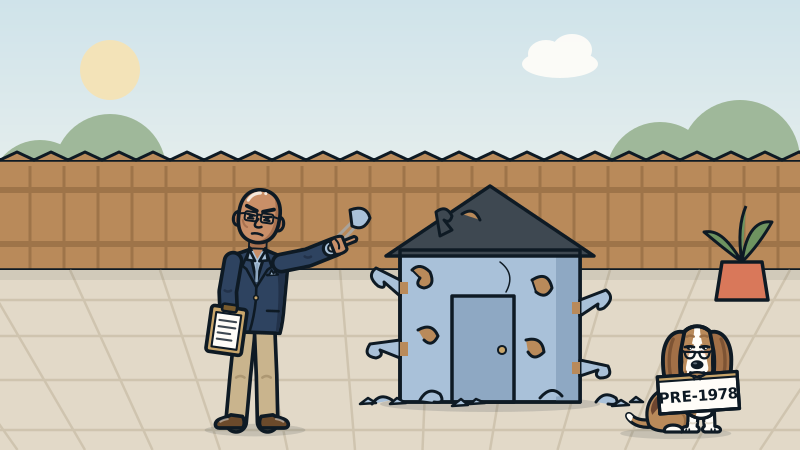
The handbook also says exterior surfaces include fences, detached garages, storage sheds and other outbuildings. That is how a deal ends up held up by a garden shed nobody has opened since the Clinton administration.
The repair itself has rules. Federal regulation 24 CFR 200.810 says treatment means covering or removing the defective paint. A few details from that rule:
- For small defective spots, scraping and repainting the area counts as adequate treatment.
- Washing and repainting without thorough removal or covering does not count.
- Machine sanding and open-flame methods like propane torches are not allowed.
- Treatment is not required if a lead-based paint inspector certified under EPA rules finds the surface is not lead-based paint.
HUD's current text also tells the lender it "must confirm that the Property is free of lead paint hazards." HUD restated that line in Mortgagee Letter 2025-18, which changed other appraisal rules but left the lead paint rule in place.
Homes built in 1978 or later: it's about protecting the wood
For newer homes, the concern is not lead. It is rot. The handbook says the appraiser must report all defective paint surfaces on the exterior and require repair of any defective paint that exposes the subsurface to the elements.
In plain words, if bare wood or another surface is open to rain and sun because the paint failed, it gets fixed. A scuffed hallway wall in a 2010 house is a cosmetic issue, not a lead hazard, and it is not the same kind of call.
Exposed wood on decks, trim, fascia and siding is where I see this most. Wood that loses its paint starts drinking water, and wood that drinks water eventually becomes a much bigger repair than a gallon of exterior paint.
What may change under HUD's 2026 proposal
On September 22, 2026, HUD posted proposed revisions to the appraisal sections of Handbook 4000.1. McKissock's summary says two changes touch paint:
- Lead-based paint requirements would apply to the dwelling only, not sheds, fences or other structures.
- Repair conditions would be limited to items that affect safety, security, soundness, marketability or the health of the occupants. Cosmetic or minor deferred maintenance would still be noted in the report but would not require a repair.
This is a proposal. It has not been adopted, and McKissock says there is no guarantee it will be. Feedback is due by November 6, 2026. Until HUD issues a final version, the current rules apply, sheds and all. If you are reading this later, ask your lender which version is in effect on your case number date.
What to do if you're buying or selling a house with peeling paint
- Check the year built on the tax record or disclosures. That one number tells you which rule applies.
- Walk the whole lot before the appraiser does. Eaves, window sills, door frames, porch rails, fences, the detached garage and the shed.
- Fix it the right way on pre-1978 homes. Scrape and repaint small spots, or cover or remove larger areas. Skip the power sander. HUD also points to applicable EPA requirements, so if you hire someone, hire a contractor who follows EPA lead-safe work practices.
- Seal exposed wood on newer homes. Prime and paint anything bare to the weather.
- Keep receipts and take photos before and after. The lender will usually need the repair verified, often by the appraiser returning for a final inspection.
- Agents: settle who pays early. Put paint repairs in the negotiation before the appraisal, not after the repair condition shows up a week before closing.
What I see in the field
Paint repairs are usually small money. The problem is timing. A $300 scrape-and-paint job found ten days before closing can feel like a $30,000 crisis when movers are booked.
Facts over feelings applies here too. Peeling paint does not mean the house is worth dramatically less. It means the lender has a rule, and the rule has a fix. On a pre-1978 house, the fix has to be done safely, especially with kids in the picture, because the point of the rule is keeping lead dust out of people.
The sellers who have the easiest FHA closings are the ones who spend one Saturday with a scraper before listing. The ones who have the hardest are the ones who insist the shed "isn't really part of the house." Under the current handbook, the shed disagrees.
Key takeaways
- Peeling paint usually makes an FHA appraisal subject to repair, not a denial.
- On pre-1978 homes, all defective paint must be noted and repaired, including on sheds and fences.
- On newer homes, defective exterior paint that exposes the surface underneath must be fixed.
- Washing and repainting over bad paint is not adequate treatment on pre-1978 homes.
- HUD's 2026 proposal would narrow the rules, but it is not adopted yet.
People also ask
Who pays for FHA paint repairs?
It is negotiable. The seller often pays because the repair is needed to close, but buyer and seller can agree either way. Your agent should put it in writing.
Does peeling paint matter on a conventional loan?
Conventional loans generally do not carry FHA's pre-1978 paint rule, though lenders can add their own. The appraiser still reports condition, and paint problems that affect safety or soundness can still lead to a repair condition.
Can a lead test avoid the repair on an older home?
Under 24 CFR 200.810, treatment is not required if a certified lead-based paint inspector finds the surface is not lead-based paint. Ask your lender how it wants that documented.
Sources
Got a question we haven't answered?
Suggest a topic or ask your own appraisal question. The best ones become posts.