What are the FHA roof requirements for an appraisal?
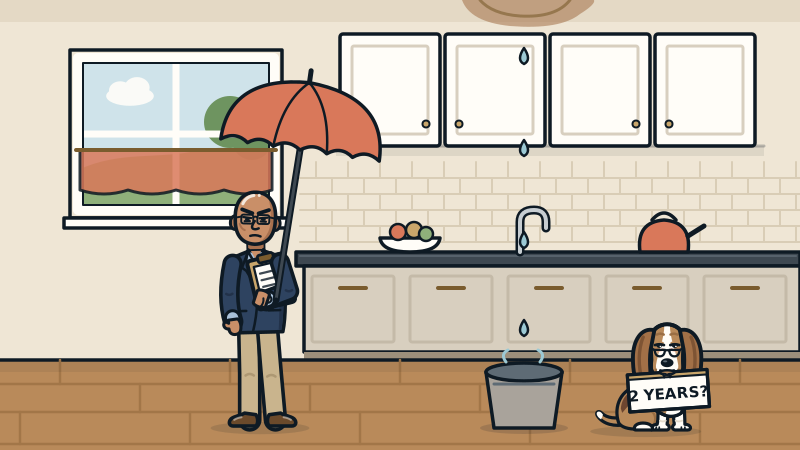
For an FHA loan, the roof must keep water out and have at least two years of remaining life. If the appraiser sees leaks or a roof near the end of its life, expect a repair condition or a roof inspection before closing. HUD proposed dropping that inspection rule in September 2026, but it is only a draft.
The FHA roof rule fits on a sticky note
The core standard is short. The roof cannot leak, and it needs at least two years of estimated life left. That is the version you will see in nearly every summary of FHA property rules, and it is the one appraisers work with every day.
Notice what is not on the list. FHA does not require a new roof. It does not care that the shingles are a color last seen on a 1994 minivan. It does not demand that the roof look pretty in the listing photos. It cares whether the roof is doing its job and will keep doing it for a while.
That is the whole point of FHA's property rules. The house has to be safe, sound and secure for the person moving in. A roof that drips into the hallway fails that test no matter how nice the kitchen is.
What the appraiser actually looks at
An FHA appraiser is not a roofer, and the appraisal is not a roof inspection. What the appraiser does is look for evidence, from the ground, from the attic hatch and from inside the rooms.
Here is what catches my eye:
- Missing, curled or cracked shingles, or bare spots on a flat roof
- Sagging lines in the roof plane
- Water stains on ceilings, especially near exterior walls and in closets
- Daylight or damp wood in the attic
- Fresh paint on one ceiling patch, which is sometimes a fix and sometimes a cover-up
- Gutters full of shingle granules, a sign the roof is shedding its armor
If I see signs of a leak or a roof that looks near the end of its life, I do not get to shrug and hope. Under the current FHA handbook, a roof with less than two years of remaining life is a reason to condition the appraisal for a professional roof inspection or repair. Leaks are a repair item.
What a roof condition does to your deal
When the appraisal comes back with a roof condition, the loan does not close until it is dealt with. Required repairs are normally finished before closing, and then the appraiser comes back to confirm the work.
HUD puts the final decision with the lender. In HUD's words, the mortgagee "must determine which repairs must be made for a Property to be eligible for FHA-insured financing." The appraiser reports what needs fixing. The lender decides what is required.
If repairs cannot be finished before closing, HUD's handbook lets the lender set up a repair escrow under its repair completion rules. Whether your lender will do that, and for which repairs, is a lender call.
Who pays is a negotiation, not an FHA rule. The seller can fix it, the buyer can pay, or the price can move. A roof is rarely a cheap line item, so this is where deals get tense and agents earn their coffee.
HUD's September 2026 proposal would change the roof rules
On September 22, 2026, HUD posted proposed revisions to Handbook 4000.1 on its FHA Single Family Drafting Table. These are drafts. They have not been adopted, and there is no guarantee they will be.
For roofs, the draft would:
- Remove the roof covering section from the appraiser requirements. HUD's stated reason is that it is "unnecessary due to the guidance in the UAD condition rating."
- Drop the roof inspection condition for a roof with less than two years of remaining life, according to McKissock's summary of the draft.
- Lean on condition ratings instead. The draft says a minimum condition rating of C4 is required for FHA acceptability.
In plain terms, HUD would stop treating the roof as its own checklist item and fold it into the overall condition rating. A leaking roof would still be a problem. It would just be a problem through a different door.
Feedback on the draft is due November 6, 2026. Until HUD publishes a final version, the current rules apply.
What I see in the field
Roof age scares people more than it should. I have seen 20-year-old roofs that were flat, tight and dry, and 10-year-old roofs that were curling at every edge because of a bad install or a tree that dropped on them every winter. Condition is what matters, not the birthday on the permit.
That is true for value too. Buyers react to condition more than age. A sound older roof rarely moves the number much. A roof that clearly needs replacing does, because every buyer walking through the house can see the bill coming.
The other thing I see is sellers hearing "FHA buyer" and assuming the appraisal will be a hunt for problems. It is not. The appraiser reports what the evidence shows. If the roof is doing its job, it passes, and the conversation moves on to the comps where it belongs.
If the roof is not doing its job, finding out during the appraisal is the expensive way to learn it. Finding out before listing is the cheap way.
What to do before an FHA appraisal if the roof is older
- Find the roof's age. Permits, invoices or the seller's disclosure will usually tell you.
- Walk the ceilings with a flashlight. Check closets, the garage ceiling and around skylights and vents for stains.
- Open the attic hatch and make sure it is reachable. Move the holiday boxes. I am not a fan of balancing on a stack of plastic bins.
- Fix active leaks now, with a licensed contractor and a receipt.
- Consider a roofer's letter on an older roof, stating its condition and estimated remaining life. It does not override the appraiser, but it is a fact on paper.
- Clean the gutters and clear debris so the roof surface can be seen.
- Write the roof into your negotiation plan before the appraisal, not after. Know who pays if it gets flagged.
Key takeaways
- FHA requires a roof that does not leak and has at least two years of remaining life.
- Signs of leaks or a short remaining life can trigger a repair condition or a roof inspection.
- The lender, not the appraiser, decides which repairs are required.
- HUD's September 2026 draft would fold the roof into the condition rating, but it is not final.
- Who pays for a roof repair is a negotiation between buyer and seller.
People also ask
Does an FHA loan require a new roof?
No. The roof has to keep water out and have at least two years of remaining life. An older roof in working condition can pass.
Does the FHA appraiser climb on the roof?
Not necessarily. The appraiser observes the roof and looks for evidence of problems from the ground, the attic and the interior. When the evidence points to trouble, the appraiser can call for a professional roof inspection.
Are HUD's proposed 2026 roof changes in effect?
No. HUD posted them as a draft on September 22, 2026 and asked for feedback. They apply only if HUD finalizes them, so check with your lender for the rules on your case.
Sources
Got a question we haven't answered?
Suggest a topic or ask your own appraisal question. The best ones become posts.