Why do new construction appraisals come in low?
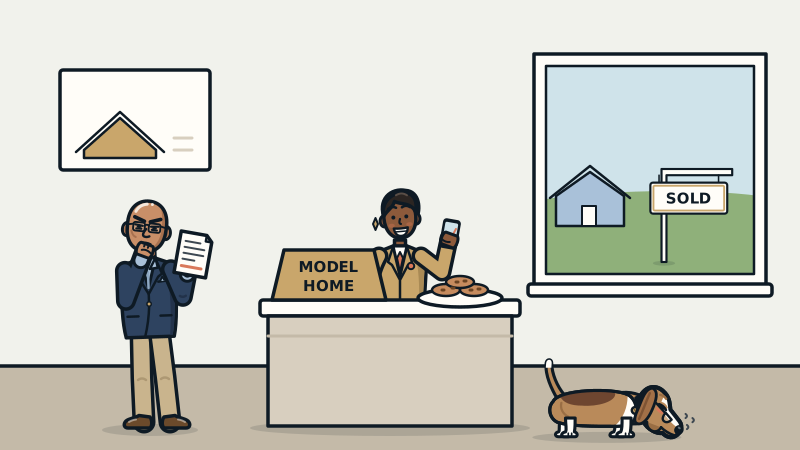
New construction appraisals can come in below contract because the appraiser has to support the price with closed sales, not the builder's price sheet. Fannie Mae requires comparables from inside and outside the subdivision, prefers resales over builder sales, treats listings as supporting data only, and requires analysis of builder concessions and upgrades.
A builder's price sheet is not a comparable sale
The sales office has a beautiful binder. Base price, lot premium, the design center upgrades, the "limited time" incentive that has been limited for eight months. None of that is a closed sale.
A contract price is one buyer and one seller agreeing. It does not set value by itself, and in new construction one of the two parties sets the price for every house on the street. The appraiser's job is to test that price against what the market has actually paid.
Fannie Mae's general rule is that an appraisal reports at least three closed comparables, and sales that closed in the last 12 months should be used. Listings and contracts can be included, but only as supporting data. When the only "sales" in a brand new subdivision are pending contracts written by the builder, the appraiser has to reach outside the project for closed evidence. That is often where the gap starts.
What Fannie Mae requires in a new subdivision
Fannie Mae's Selling Guide has specific rules for properties in new projects, subdivisions and PUDs:
- At least one settled sale from inside the subject's project or subdivision. A resale is preferred if it is verifiable and does not involve the builder.
- At least one settled sale from outside the project.
- The third sale can come from inside or outside. Inside sales are preferred when the builder is not involved.
- If the subject is one of the first houses to sell, two pending sales inside the project can stand in for one settled sale. But then at least three settled sales from outside the project are still required.
- Concessions and upgrades must be analyzed. Builder sales from competing projects must be analyzed for their concessions and upgrades and verified through the settlement statement.
Read that list again with a builder's eyes. The rules push toward resales and outside sales, which are the sales the builder did not price. They exist for a reason: a project with only builder sales can grade its own homework.
Upgrades and incentives are not worth what they cost
This is the part that stings. A buyer spends heavily at the design center on cabinets, flooring, lighting and a kitchen island big enough to land a small plane. The contract goes up by that amount. The appraisal often does not.
Upgrades get valued by how buyers in that market react to them, measured from sales. Some upgrades carry a lot of value. Some carry very little. The cost of a feature and its value to the next buyer are two separate numbers, and the appraiser is only allowed to report the second one.
Builder incentives work the same way. Paying closing costs or buying down the rate can push a contract price up. Concessions are not worth dollar for dollar. The adjustment is whatever the market actually reacted with, and it has to be measured. That is why Fannie Mae requires the appraiser to analyze concessions in the subject sale and in the builder sales used as comps.
Phase pricing can outrun the closed sales
Many builders raise prices as a community sells. That can make sense when demand is strong. It also creates a timing problem for the appraisal.
The closed sales in the project may be from an earlier phase, priced months ago. The new contract reflects today's price list. If the market truly rose in between, the appraiser should measure that change and adjust the older sales to today. If the price list rose faster than the market did, the appraisal will show it.
This is why I read the market in real time. I test the shortest recent window the sales can support rather than lean on a 12-month average that hides a turn. A good time adjustment can close a gap that a lazy one leaves open. But the adjustment has to come from evidence. A price list going up is a builder decision, not a market measurement.
A model home with fresh cookies and a sales rep who calls everyone "neighbor" is not evidence either. Lovely, though.
What I see in the field
The first question I ask on a new home is not "what did the builder charge?" It is "what has the market shown it will pay for a house like this?" Sometimes the best answer is a resale inside the community. Sometimes it is a newer home in a competing project a mile away, with its incentives backed out.
Buyers in the markets I work react to condition more than to age. A two-year-old resale in good condition can compete right alongside brand new homes, because it often comes with landscaping, window coverings and a finished backyard. A brand new house with a dirt backyard is new, but the yard is not finished. That difference has to be measured, not assumed.
I also see buyers surprised that the appraiser did not count the builder's model upgrades. The model is staged. Your house is your house. The appraiser values the one you are buying, with the features you actually contracted for.
What to do before and after the appraisal
For buyers:
- Keep your appraisal contingency if you can, and read what it actually covers.
- Ask the builder for the closed sales prices in the community, not only the current price list.
- Be careful with very expensive upgrades. Ask whether similar upgraded homes have resold for more.
- If the value comes in low, ask your lender about a reconsideration of value with better closed sales.
For builders and their lenders:
- Give the appraiser the upgrade list with costs, the lot premium, and the settlement statements for closed sales.
- Disclose every concession in the contract. Hidden incentives get found, and then everything else gets questioned.
- Point to resales in the project and recent sales in competing projects, with their incentives.
This is general information on agency guidelines. The lender's own rules, called overlays, control your loan.
Key takeaways
- A builder's price list and pending contracts are not closed sales.
- Fannie Mae requires comparables from inside and outside a new subdivision.
- A verifiable resale not involving the builder is preferred over a builder sale.
- Upgrades and builder incentives are valued by market reaction, not by cost.
- Rising phase prices only hold up if the market trend can be measured.
People also ask
Will the builder lower the price if the appraisal is low?
It depends on the builder and the contract. Some will lower the price, and some offer incentives instead, which the appraiser then has to analyze as concessions.
Can an appraiser use pending sales in a new subdivision?
Only in limited ways. If the subject is among the first sales, two pending sales in the project can replace one settled sale, but three settled sales from outside the project are then required.
Do lot premiums count in the appraisal?
A better lot can carry value, but only what buyers in that market have shown they pay for it. The appraiser measures that from sales, not from the builder's premium.
Sources
Got a question we haven't answered?
Suggest a topic or ask your own appraisal question. The best ones become posts.