What are USDA appraisal requirements?
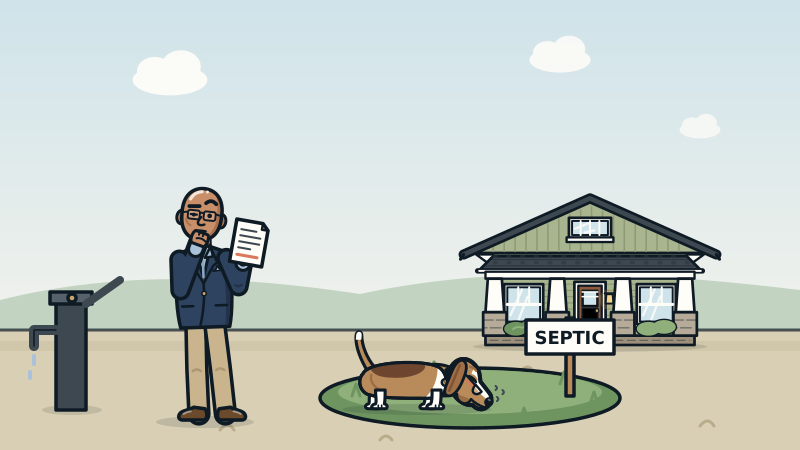
For a USDA guaranteed loan, the home must meet HUD Handbook 4000.1 property standards, or meet them after repairs. The lender picks a state-licensed or certified appraiser, since USDA keeps no approved list. The appraisal is good for 180 days at closing, and a one-time update can stretch that to one year, but it cannot raise the value.
USDA borrows its property rules from HUD
USDA did not write a separate rulebook for what makes a house acceptable. For its guaranteed loan program, it points to HUD. The home has to meet the minimum property standards in HUD Handbook 4000.1, the same handbook FHA uses, or meet them after required repairs.
An appraiser or inspector the lender considers qualified has to certify whether the property meets those standards, and the certification should name HUD Handbook 4000.1 specifically.
In practice, that means a USDA appraisal looks for the same kinds of problems an FHA appraisal does: safety hazards, structural issues and anything that keeps the house from being a sound place to live. Ugly paneling in the den is safe. So is a shag carpet that remembers disco.
All of this comes from USDA's program handbook, HB-1-3555, Chapter 12, as presented in USDA Rural Development's own appraisal training.
The site has to fit USDA's rural rules too
USDA loans exist for homes in rural areas, so the appraisal also has to confirm the property fits the program. According to USDA's training, the property must:
- Be predominantly residential and in a rural area under Rural Development's definition
- Have no income-producing buildings or land. A working orchard or a rental barn is a problem.
- Be contiguous to a street, road or driveway with access
- Have adequate utilities
- Meet zoning. A legal non-conforming property must be reported as one, with any effect on value addressed.
The income-producing rule catches people. A few chickens for your own eggs is a lifestyle. A roadside egg stand with a cash register and a sign is a business, and the appraiser has to report what is actually there.
If you are not sure whether a property qualifies as rural, check before you fall in love with it.
Wells and septic systems get extra attention
Rural homes often run on a private well and a septic system, and USDA's training spells out what the lender needs:
- The distance between the well and the septic system has to meet local or state code, or HUD's requirements.
- The septic system must show no observable evidence of failure.
- A safe water test is always required for a private well.
That water test is not optional and it is not something the appraiser can eyeball. Plan for it early. Lab results take time, and a bad result is a lot easier to deal with in week one of escrow than the night before closing.
Septic is the same story. The appraiser is looking for visible signs of trouble: soggy ground, odors, effluent where it should not be. If the backyard has a suspiciously green patch in August, that is not a gardening win.
Who picks the appraiser, and how long the appraisal lasts
The lender picks. USDA keeps no approved appraiser list. The lender selects an appraiser who follows USPAP (the national appraisal standards), is independent and objective, and is properly licensed or certified in the state where the property sits.
It is good for 180 days. The initial appraisal is valid for 180 days at loan closing. A one-time appraisal update can extend that to one year from the original report date. The update only checks whether the value has declined. It cannot support a higher value, so a hot market does not get you a bigger number this way.
Transfers are possible. An appraisal can move to a new lender if the original lender agrees, the new lender takes on all responsibility, and the appraisal is no more than 180 days old at closing, or within the one-year limit with an update.
A second appraisal is possible too. If an appraisal is unacceptable, the lender may order another one, and its cost can be financed if it is reasonable and customary. USDA also reviews appraisals on its own form, RD 1922-15, and can ask the lender for corrections.
What to do before a USDA appraisal
- Confirm the property is eligible for USDA's rural area before writing the offer.
- Schedule the well water test early if the home has a private well.
- Know where the septic tank and well are, and have any pumping or service records ready.
- Walk the house for safety items: leaks, peeling paint, exposed wiring and anything structural.
- Be clear about outbuildings. Tell your loan officer if any building or land produces income.
- Give the appraiser access to the crawl space, attic, panel, water heater and every outbuilding.
- Plan repairs with the completion step in mind. Finished repairs can be documented on Fannie Mae Form 1004D or Freddie Mac Form 442, or with an inspection report or photos, depending on what the lender requires.
What I see in the field
Rural appraisals are harder than they look from the road. Comparable sales are farther apart, lot sizes vary wildly, and one property might have a shop building while the next has three acres of nothing. Adjustments have to be measured from real sales, not borrowed from a city rule of thumb.
The loan program does not change the value. A USDA appraisal is built from the same evidence as any other: what similar homes actually sold for, adjusted for real differences. The program rules decide whether the house qualifies. The market decides what it is worth.
When good rural sales are thin, an older sale can still help, as long as it is adjusted to today's market and to the subject house. Lenders usually want recent sales on the grid, but the older ones can still back up the story. Your best help as a buyer or seller is a clear list of what is on the land: buildings, wells, septic, fencing and anything added since the last sale.
Key takeaways
- USDA guaranteed loans require the home to meet HUD Handbook 4000.1 standards, or meet them after repairs.
- The lender chooses a licensed or certified appraiser. USDA keeps no approved list.
- An appraisal is valid 180 days at closing, extendable once to one year, and an update cannot raise the value.
- Private wells always need a safe water test, and septic must show no evidence of failure.
- Income-producing buildings or land are not allowed.
People also ask
Is a USDA appraisal the same as an FHA appraisal?
They share HUD Handbook 4000.1 property standards, but USDA adds its own rules, like the rural area, income-producing and well and septic requirements. The validity and transfer rules also follow USDA's handbook.
Can a USDA appraisal update increase the value?
No. A one-time update can extend validity to one year from the original report date, but it only checks whether the value has gone down. It cannot support a higher value.
Does USDA have its own list of approved appraisers?
No. The lender selects a qualified, independent appraiser who is licensed or certified in the property's state.
Sources
Got a question we haven't answered?
Suggest a topic or ask your own appraisal question. The best ones become posts.