What is a hybrid appraisal?
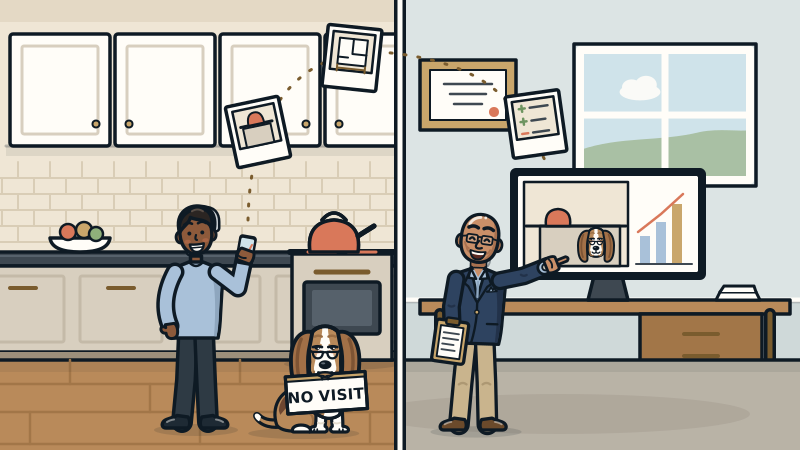
In the lender version, a hybrid appraisal splits the work between two people. A trained third party, such as a real estate agent, insurance inspector or appraiser, visits the home and collects property data. A separate appraiser uses that data, plus records and market data, to develop the value. Private hybrid appraisals can work without any site visit.
The lender version: one person visits, another appraises
In a traditional appraisal, the same appraiser walks through the house, measures it, takes the photos and writes the report. A hybrid appraisal splits that job in two.
Under Fannie Mae's Selling Guide, a hybrid appraisal is an appraisal option that requires a property data collection. A trained and vetted third party, like a real estate agent, an insurance inspector or an appraiser, goes to the property and collects the facts: room counts, condition, photos and a floor plan. The appraiser then relies on that data, and other sources if needed, to judge the property's characteristics, including condition, and to develop the value.
The report goes on Form 1004 Hybrid, or Form 1073 Hybrid for a condo. Both require the usual exhibits plus a floor plan that follows the ANSI measuring standard. Those form numbers are on their way out: under UAD 3.6, Freddie Mac says the hybrid variants are replaced by the redesigned URAR, which is mandatory for new reports submitted to UCDP on or after November 2, 2026.
It is a bit like a cooking show where one person shops and another person cooks. The meal is only as good as the groceries.
When a lender can use a hybrid appraisal
A lender does not get to pick a hybrid on any loan it likes. For Fannie Mae loans, Desktop Underwriter (DU) issues a message when a loan is eligible. The lender can then choose a hybrid, a desktop or a traditional appraisal.
As of Fannie Mae's guide revision dated December 10, 2025, hybrids are eligible for:
- Transactions: purchases, limited cash-out refinances and cash-out refinances
- Occupancy: principal residences, second homes and investment properties
- Properties: existing one-unit homes, including condos and PUD units, plus homes under construction or with unfinished renovation
They are not eligible for 2–4 unit properties, co-ops, manufactured homes, proposed construction, construction-to-permanent loans, HomeStyle Renovation and Refresh loans, or manually underwritten loans.
Other loan programs have their own rules. FHA, VA and private lenders do not automatically follow Fannie Mae, so ask your loan officer which options your loan actually has.
Is a hybrid appraisal as good as a traditional one?
It can be, when the data is good. The appraiser is still responsible for the value, and the report still has to meet Fannie Mae's rules against unacceptable appraisal practices. What changes is who gathered the facts.
That is the risk and the reward. A well-trained data collector with a clear checklist and a good camera can capture a house accurately. A rushed one who photographs the kitchen and forgets the converted garage gives the appraiser half a story.
Here is what I would want a borrower to know. The value in any appraisal comes from comparable sales and from adjustments measured from real market evidence. Square footage, condition and updates drive most of those adjustments. So the facts collected at the house matter a lot, whoever collects them.
If you are the homeowner, the easiest way to protect your value is to make those facts impossible to miss. More on that below.
The private version: ValuedAudit's desktop and hybrid appraisals
Outside of lending, the word hybrid gets used differently. At ValuedAudit, a desktop appraisal and a hybrid appraisal are the same product, and neither one needs a site visit.
Here is how it works. You supply what you know about the property: the basics, photos if you have them, and the pros and cons you are aware of, like a new roof, a remodeled kitchen or a busy street out back. I combine that with public records, market data and the technology and methods I use on every assignment to build the value.
My approach is evidence based. It blends data science with human insight, which I have taught and practiced for almost two decades, long before anyone was asking a chatbot what their house is worth.
A private desktop or hybrid appraisal is not a substitute for the appraisal your lender orders on a mortgage. It is for decisions where you need a real, evidence-backed number without a site visit, like planning a sale or settling an estate.
We also do a desktop review, which is a second opinion on someone else's appraisal, checked against the evidence.
What I see in the field
The biggest mistake I see with any appraisal that is not a full walk-through is assuming it is a lesser product. It is a different scope. The quality depends on the evidence behind it, the same as always.
Where these reports go wrong is almost always the inputs. A missed bathroom. A detached cottage counted in the main house's square footage, which it never should be. A remodel that never made it into the photos. The appraiser can only weigh what is in front of them.
Where they go right is when the facts are clear and the comparable sales are strong. Then the value holds up whether someone stood in the kitchen or not. That is why I spend so much time on the evidence and so little on guesses. Facts over feelings, and facts over a pretty photo of a fruit bowl.
What to do before a hybrid or desktop appraisal
For a lender hybrid with a data collector visiting:
- Clear access to every room, the garage, the attic hatch, the panel and the water heater.
- Point out what is easy to miss: a remodeled bath upstairs, a finished room over the garage, new windows.
- Leave a one-page upgrade list with dates and permits on the kitchen counter.
- Ask your loan officer when the appraiser expects the data, so you are not waiting on a missing photo.
For a private desktop or hybrid with no site visit:
- Send clear photos of the front, back, street, kitchen, baths and any problem areas.
- List the upgrades with dates and rough costs.
- Be honest about the flaws. The crack in the driveway will not be less real for being left out, and an accurate value needs it.
- Include permits and HOA details if you have them.
Key takeaways
- A lender hybrid appraisal splits the job: a trained third party collects data on site and a separate appraiser develops the value.
- For Fannie Mae loans, DU tells the lender when a hybrid is an option.
- Eligible properties are existing one-unit homes, including condos and PUDs. 2–4 units, co-ops and manufactured homes are out.
- At ValuedAudit, desktop and hybrid are the same private product and need no site visit.
- Whatever the format, clear facts about the house protect the value.
People also ask
What is the difference between a hybrid and a desktop appraisal?
In Fannie Mae's lender version, a hybrid relies on a third party who collects data at the home, and a desktop appraisal is a separate option DU may offer instead. At ValuedAudit, desktop and hybrid are the same private product, with no site visit.
Can a real estate agent be the data collector?
Under Fannie Mae's rules, the data collector can be a trained and vetted third party, and the guide lists real estate agents among the examples. The lender manages who does it.
Can I order a hybrid appraisal for my mortgage myself?
No. On a mortgage, the lender chooses the appraisal type based on what the loan is eligible for. A private desktop or hybrid appraisal is for your own decisions, not a lender's file.
Sources
Got a question we haven't answered?
Suggest a topic or ask your own appraisal question. The best ones become posts.