Who pays for the appraisal, the buyer or the seller?
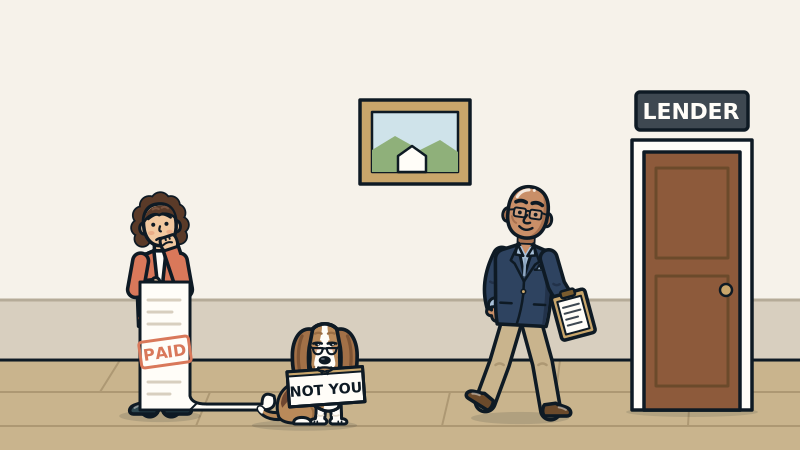
On a home purchase, the buyer usually pays. The buyer's lender orders the appraisal and the buyer reimburses the cost, often as part of closing costs. On a refinance, the homeowner pays. A seller who orders an appraisal before listing pays the appraiser directly. Paying for the appraisal does not make you the appraiser's client.
On a purchase, the buyer usually pays
Here is the normal setup. The buyer's lender orders the appraisal, and the buyer pays the lender back for it. Freddie Mac says it plainly: the buyer will likely be required to reimburse the lender. Bankrate lists the appraisal fee as one of the buyer's closing costs.
The seller pays for plenty of other things. The listing photos. The fresh paint. The cookies at the open house that nobody admits to eating six of. The appraisal on the buyer's loan is not usually one of them.
How much? Bankrate, citing Angi data from 2025, puts the national average for a single-family home at about $357, with a typical range of $314 to $423. Treat that as a starting point, not a quote. Bankrate also notes that bigger homes, higher-cost areas, homes in rough condition, homes with few comparable sales and government-backed loans can all push the fee up. In much of California, you should expect to land above the national average.
Paying for it does not make you the client
This surprises people more than anything else in this post. On a loan appraisal, the lender is the client. You paid, but the lender hired.
Fannie Mae's rules put the lender in charge of picking the appraiser. Lenders may use an appraisal management company to handle the ordering, but they may not use an appraisal ordered by the borrower or by anyone else with an interest in the deal, like the seller or the real estate agent. That rule exists to keep the appraiser independent of the people who want a certain number.
Think of it like a restaurant. Paying for dinner does not let you walk into the kitchen and tell the chef how much salt to use.
You do get something real for your money, though. Under the federal Equal Credit Opportunity Act rules (Regulation B), your lender must give you a copy of the appraisal promptly when it is done, or at least three business days before you close, whichever comes first. The lender cannot charge you for the copy. It can charge a reasonable fee to cover the appraisal itself, which is the fee we are talking about.
Who pays in a refinance and other situations
The answer changes with the reason for the appraisal.
- Refinance. There is no buyer, so the homeowner pays. Freddie Mac says the borrower typically reimburses the lender as part of closing costs, and in most cases the lender must give the borrower a copy.
- Pre-listing appraisal. If you are a seller and you hire an appraiser before you list, you pay the appraiser directly. In that case you are the client, and the report is written for you.
- Estates, trusts, divorce and tax work. Whoever hires the appraiser is the client and pays the fee. On these private assignments the appraiser works for you, not a bank.
- The seller on a purchase. Freddie Mac notes that a seller typically won't receive a copy of the buyer's appraisal. A seller who wants to see it can ask the buyer to share it.
The pattern is simple. The person whose loan or decision depends on the value usually pays, and the party that hires the appraiser is the client.
Can the seller cover the cost instead?
Sometimes, indirectly. A purchase contract is a negotiation, and buyers often ask sellers for a credit toward closing costs. That credit can end up covering the appraisal fee along with everything else.
Two things to know before you write that into an offer. First, your loan program may limit how much a seller can contribute, so ask your loan officer before you count on it. Second, a seller credit does not change who orders the appraisal or who the appraiser works for. The lender still hires the appraiser, and the seller's money does not buy a number.
One more point for the agents reading this. When a sale closes with a seller credit, that credit follows the sale into the record. In my view, the next appraiser who uses that sale as a comparable should not take the credit off dollar for dollar. The right adjustment is whatever the market actually paid for that credit, and that has to be measured. A credit that covered an appraisal fee is pocket change. A big credit on a slow listing is a different story.
What I see in the field
The most common mix-up I run into is a buyer who thinks paying the fee buys a seat at the table. It doesn't, and that is a good thing. An appraiser who can be leaned on by whoever writes the check is not worth the check.
What I do welcome from anyone is facts. A list of upgrades with dates. Permits. A note that the garage was converted with a permit, or without one. A sale down the street you think I should know about. Facts over feelings. If it is real, it belongs in the analysis, no matter who hands it to me.
On the private side of my practice, where the homeowner hires me directly, the person paying is the client. That is why my private reports walk the reader through the house, the sales and the conclusion. When you pay for the work, you should be able to see the work.
What to do before you pay the fee
- Ask your loan officer for the fee in writing and when it will be collected: up front, at closing, or as part of your closing costs.
- Ask what happens to the fee if the deal falls apart. Policies differ by lender, so get the answer before the inspection turns up a cracked foundation.
- Ask whether the property type raises the price. A large home, a rural parcel, a 2–4 unit building or an FHA or VA loan can cost more.
- Look for the appraisal copy. It should arrive promptly when done, or at least three business days before closing, and it should be free.
- Prepare a short fact sheet for the appraiser: upgrades with dates, permits, and anything unusual about the house. It costs you nothing and it helps the person you are already paying.
Key takeaways
- On a purchase, the buyer's lender orders the appraisal and the buyer usually pays for it.
- On a refinance, the homeowner pays. On a pre-listing appraisal, the seller pays directly.
- Paying for a loan appraisal does not make you the client. The lender is.
- Your lender must give you a free copy at least three business days before closing.
People also ask
Do I pay for the appraisal if the house appraises low?
Yes. You pay for the work, not the result. The fee is the same whether the value comes in high, low or right at the contract price.
Can I use an appraisal I ordered myself for my mortgage?
Usually not. Fannie Mae does not allow lenders to use appraisals ordered by borrowers, sellers or agents. Your own appraisal is still useful for pricing, planning and negotiation.
Does the seller ever see the buyer's appraisal?
Not automatically. The lender gives the copy to the borrower. The seller can ask the buyer to share it, and many contracts and agents handle that request.
Sources
- Freddie Mac: What Homeowners Need to Know About Home Appraisals
- Bankrate: How Much Does an Appraisal Cost?
- Fannie Mae Selling Guide B4-1.1-03: Appraiser Selection Criteria
- CFPB Regulation B, 12 CFR 1002.14: Rules on Providing Appraisals and Other Valuations
- Sacramento Appraisal Blog: Does the Buyer Own the Appraisal?
Got a question we haven't answered?
Suggest a topic or ask your own appraisal question. The best ones become posts.