Why is my appraisal different from my Zestimate?
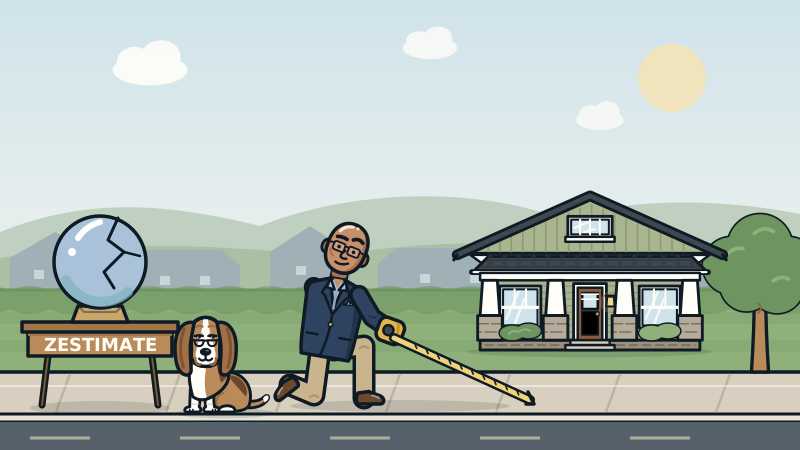
Because they are two different things. A Zestimate is a computer estimate built from public records, listing data and market trends, and Zillow itself says it is not an appraisal. An appraisal is a licensed appraiser's opinion based on your actual house, its real condition and hand-picked sales that compete with it.
A Zestimate is software, not a site visit
Zillow is pretty upfront about this. It calls the Zestimate its estimate of a home's market value, a computer-generated number based on the data it has. It also says, in plain words, that the Zestimate is not an appraisal and can't be used in place of one.
Here is what goes into it, according to Zillow: county and tax assessor records, direct feeds from local MLS systems, basic home facts like size, location and bedroom and bathroom counts, listing details such as list price and days on market, and market trends like seasonal demand.
Notice what is missing from that list. Nobody walked through your kitchen. Nobody saw the new roof, the remodeled primary bath, or the fact that the "third bedroom" is now a very serious model train setup. The software knows what the public record says about your house. If the record is wrong or out of date, the estimate starts from the wrong place.
I don't say this to pick on Zillow. A Zestimate is a fine conversation starter. It is just not built to answer the question a lender is paying an appraiser to answer.
What an appraiser does that an algorithm can't
When I appraise a house, I am answering one question: what would a typical buyer pay for this specific property, as of a specific date, based on what the market has actually done?
To get there, I do a few things a model working from records cannot:
- Look at the real house. Condition and quality carry real money. Buyers react to condition far more than to the year it was built. A remodeled 1960s ranch can outsell a tired 2005 house with all original finishes.
- Pick the right comparable sales (comps). Comps are recent sales of homes that compete with yours. I choose them by hand, and I can throw out the sale that looked similar on paper but was a foreclosure with a cracked slab.
- Measure each difference. If your house has a pool and the comp doesn't, the adjustment comes from what pools actually do to prices in your market, not a guess.
- Check the details. Seller credits, a sale between relatives, a garage converted without permits. These change what a sale really tells you.
Facts over feelings. Also facts over formulas.
Why the two numbers drift apart
There are a handful of common reasons a Zestimate and an appraisal land in different places:
- Bad or stale records. If the county still thinks you have two baths and 1,400 square feet, the model does too.
- Condition is invisible to it. A gut remodel and a house that hasn't been touched since disco can look identical in public data.
- Listing status changes accuracy. Zillow publishes separate accuracy figures for homes that are on the market and homes that are not, broken out by region. That tells you something: when a home is listed, the model gets a list price and fresh photos to work with. When it isn't, it has less to go on.
- Odd houses. Big lots, views, a busy street, an unusual floor plan. The more your house differs from its neighbors, the harder it is for any automated estimate to price it.
- Timing. An appraisal is tied to a specific effective date. An online estimate keeps moving.
The estimate is not trying to be wrong. It just has never smelled your garage.
Do lenders ever use automated values?
Yes, but not the one on your phone. Fannie Mae, for example, can offer a lender value acceptance through its Desktop Underwriter system on some loans, which means no appraisal is ordered for that transaction. Fannie Mae says those offers are built from its own database of millions of appraisals combined with its own analytics.
That is a lender tool with its own rules and eligibility limits. It is not a consumer estimate, and a Zestimate does not feed it. If your lender ordered a full appraisal, the appraisal is what the lender will use, not the number you showed your neighbor at the mailbox.
Rules for when a lender can skip an appraisal depend on the loan program and the lender, so ask your loan officer what applies to your file.
What to do if the gap worries you
If your appraisal came in well below your online estimate, don't panic and don't argue with the internet. Do this instead:
- Read the report. Check the basic facts first: square footage, bedroom and bath count, lot size, garage, pool. Errors in facts are the easiest thing to fix.
- Look at the comps the appraiser used. Are they really your competition? Same kind of street, similar size and condition?
- Gather better sales, if they exist. Closed sales nearby that the appraiser missed are real evidence. A higher online estimate is not.
- List your upgrades with dates. Roof, windows, kitchen, HVAC, permits. If these were missed, that matters.
- Ask your lender about a reconsideration of value. On a loan, the request goes through the lender, not straight to the appraiser.
A reconsideration request built on "Zillow said more" is a short read for the underwriter. One built on three better comps and a fixed square footage error gets attention.
What I see in the field
People bring up their Zestimate with me a lot. Usually it is said with the same tone people use for their horoscope: they don't fully believe it, but they'd like it to be true.
My view is simple. An online estimate is a starting guess about the neighborhood. An appraisal should teach you why your house is worth what it is worth: which sales matter, what each difference costs or adds, and how the market is moving right now. If an appraisal just hands you a number with no reasons, that is a weak appraisal. If it walks you through the evidence, you can check it yourself, which is better than trusting any number, mine included.
Key takeaways
- Zillow says the Zestimate is not an appraisal and can't replace one.
- The Zestimate works from records and listing data; it never sees your home's condition.
- Wrong public records are one of the most common reasons the numbers differ.
- To challenge a low appraisal, bring better closed sales and fixed facts, not a screenshot.
People also ask
Can I use my Zestimate to dispute a low appraisal?
Not by itself. Lenders review evidence like closed comparable sales and factual errors in the report. An online estimate is not considered market evidence.
How do I fix wrong facts in my Zestimate?
Zillow lets owners update home facts on their listing page. That can change the estimate, but it won't change your appraisal. For the appraisal, give the appraiser or lender documents like permits and upgrade records.
Is the Zestimate usually higher or lower than an appraisal?
It can go either way. It depends on how accurate the public record is, how unusual the house is, and whether it is listed for sale.
Sources
Got a question we haven't answered?
Suggest a topic or ask your own appraisal question. The best ones become posts.