How do appraisers choose comparable sales?
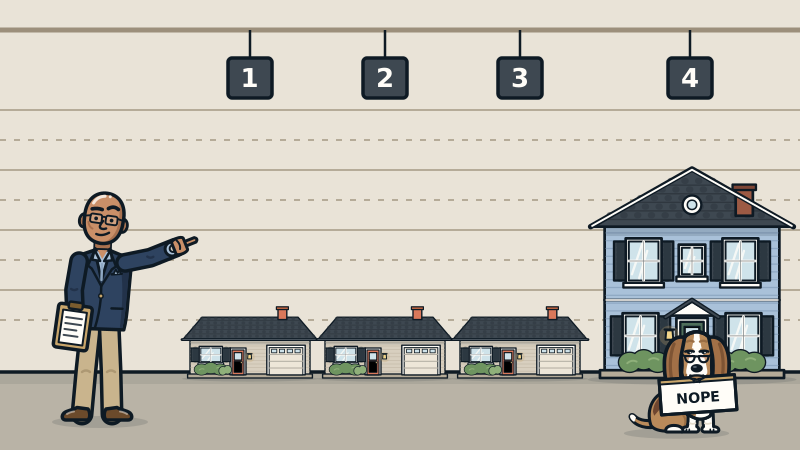
Appraisers pick recent closed sales of homes a buyer would see as real alternatives to yours: same market area when possible, similar size, age, condition, lot and features. Fannie Mae requires at least three closed sales. Listings and pending sales can support the analysis, but they cannot replace closed sales.
A comp is a house your buyer would also tour
A comparable sale, or comp, is a recent sale of a home that competes with yours. The test I use is simple: if a buyer was shopping for your house, would they also have walked through this one?
Fannie Mae puts it in rule form. Comps should have similar physical and legal characteristics to the house being appraised. That means things like size, bedroom and bath count, lot, age, quality, condition and zoning. The appraiser also has to think about outside factors, such as whether a comp sits in a FEMA flood zone and yours doesn't.
What a comp is not: the highest sale on your street because it sounds nice. The house four doors down that sold for a record price had a pool, a view and an extra 900 square feet. It is your neighbor. It is not your twin.
The rules most lender appraisals follow
A large share of US home loans are sold to Fannie Mae or Freddie Mac, so their rules shape comp selection on most conventional loans. Here is what Fannie Mae's Selling Guide says about comparable sales:
- At least three closed sales. A minimum of three closed comparables must be reported. The appraiser can use more.
- Same market area first. Sales from the same neighborhood or subdivision are preferred when possible.
- Competing neighborhoods are allowed. If the appraiser goes outside the neighborhood, the report has to say so and address the differences. The appraiser can't just stretch the neighborhood boundary to fit the comps.
- Listings and pending sales are support. Current listings and contracts can be used as supporting data, but they don't count toward the three closed sales.
- No made-up comps. An appraiser can't combine a vacant land sale with a home's contract price and call that a comparable sale.
- Recent sales are expected. Sales within the last 12 months should be used. Older sales are allowed when the appraiser explains why, such as in a rural area with few sales. I also adjust an older sale to today's market so it speaks for the current date.
FHA, VA and private lenders have their own rules, so the details depend on the loan.
How I narrow the field
Pulling sales is easy. Choosing the right ones takes judgment backed by evidence. My order of operations looks like this:
- Start close and recent. Same subdivision or same pocket of the neighborhood, most recent sales first.
- Match what buyers pay for. Living area, bedrooms, baths, lot size and usable yard, garage, view, street type.
- Match condition before age. Buyers react to condition more than birth year. A remodeled 1960s house and a tired 2005 house do not compete just because one has newer drywall.
- Check the story behind each sale. Seller credits, a sale between relatives, a bank-owned sale, a house that sold with a tenant in place. These can bend a price. Fannie Mae lets appraisers use foreclosures and short sales if they're the best data, but the report must address how they differ.
- Widen only if needed. If I have to go farther or older, I say why and adjust for it.
An older sale isn't useless. Adjusted to today's market and to your house, it can still tell me something real.
Why the seller's contract price isn't a comp
Sellers sometimes ask why the appraiser didn't just use their accepted offer. The answer: one buyer and one seller is not the whole market. The contract is the thing being tested, so it can't also be the evidence.
The appraiser does look at the contract and the listing history. But the value comes from what other buyers actually paid for competing homes. If the market supports the price, great. If your offer came from the one buyer who fell in love with your koi pond, the comps will say so politely.
What sellers can do to help
You can't pick the comps, and you shouldn't try to pressure anyone who does. But you can make sure the appraiser has good information:
- Make an upgrade list with dates and permits: roof, kitchen, baths, windows, HVAC, solar, additions.
- Note what makes your house different. A bigger usable yard, a view, a quieter location than the busy corner sale.
- Share sales you know about through your agent, especially closed sales that are similar. The appraiser decides whether they fit, but helpful data is welcome.
- Flag sales with unusual stories, like a fixer that sold off market or a sale with big seller credits, if you know them firsthand.
- Leave the Zestimate in the drawer. It isn't evidence.
Facts over feelings. A list of real sales with addresses beats "everyone says houses here are going for more."
Why two appraisers might pick different comps
Comp selection takes judgment, so two good appraisers can choose different sales. That's normal. What matters is whether each comp is defended and each difference is measured from the market, not a rule of thumb.
Different comps should still point to roughly the same place. If two appraisals of the same house disagree a lot, the gap usually traces back to one or two sales that don't really compete with the house, or to adjustments nobody measured.
A good report should teach you why each sale was chosen, how it compares to your home and what each adjustment is based on. If you read the comps page and can't tell why a sale is there, that's a fair question to raise through your agent or lender.
Key takeaways
- Comps are recent closed sales a buyer would see as real alternatives to your home.
- Fannie Mae requires at least three closed comparable sales.
- Listings and pending sales can support the value, but can't replace closed sales.
- Your contract price is what gets tested, so it can't be its own evidence.
- Give the appraiser an upgrade list and solid closed sales, not opinions.
People also ask
How old can comparable sales be?
Under Fannie Mae rules, sales within the last 12 months should be used. Older sales are allowed when the appraiser explains why they are used, for example when recent sales are scarce. A good appraiser also adjusts them for time.
Can my agent send comps to the appraiser?
Agents can usually provide relevant sales data, and many appraisers welcome it. The appraiser decides what to use and can't be pressured toward a value.
Can an appraiser use a pending sale as a comp?
Yes, as supporting data. Fannie Mae still requires at least three closed sales in the report.
Sources
Got a question we haven't answered?
Suggest a topic or ask your own appraisal question. The best ones become posts.