Do I always need an appraisal to get a mortgage?
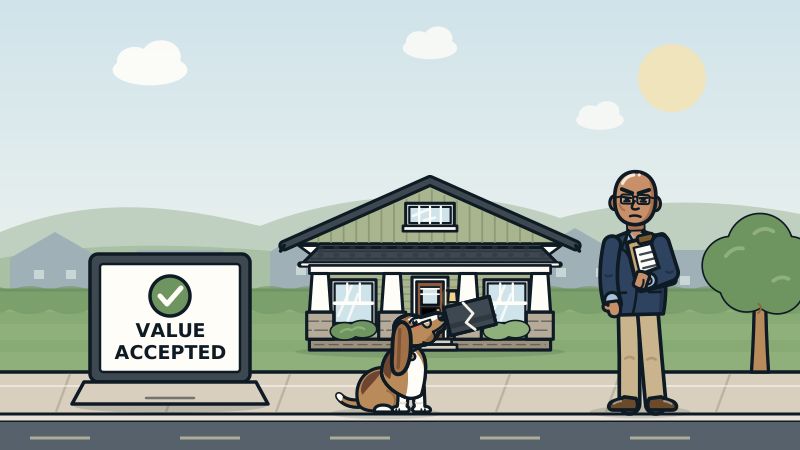
No. Some conventional loans sold to Fannie Mae or Freddie Mac can skip the appraisal. Fannie Mae calls this Value Acceptance (formerly an appraisal waiver), and Freddie Mac calls it ACE. The offer comes from the automated underwriting system, and many loans still need a full appraisal, including homes priced or valued at $1 million or more.
The appraisal waiver has a new name
For years the industry called it an appraisal waiver. In October 2024, Fannie Mae renamed it. A waiver is now called Value Acceptance. The version where someone still visits the house to collect facts is called Value Acceptance + Property Data.
Freddie Mac has its own version, called ACE (automated collateral evaluation). Different name, same idea: a computer model looks at what it already knows about the property and the market, then decides whether the lender can skip the appraisal.
Nobody fills out an application for one. Fannie Mae tells lenders about eligible loans through Desktop Underwriter, the system your loan file runs through. The offer shows up or it doesn't. Your loan officer can't sweet talk it into appearing, and neither can your uncle who "knows a guy at the bank."
Who can skip the appraisal, and who can't
Starting in the first quarter of 2025, Fannie Mae raised the limit for Value Acceptance on purchases of primary homes and second homes from 80% loan-to-value (LTV) to 90%. LTV is the loan amount divided by the property value. In plain terms, a buyer putting 10% down can be eligible for the offer. For the property data version, Fannie Mae raised the limit to the program limits. Freddie Mac announced the same 80% to 90% move for ACE.
Plenty of loans are still left out. Fannie Mae's Selling Guide lists transactions that can't use Value Acceptance, including:
- Two- to four-unit properties and co-op units
- Manufactured homes
- Proposed construction and construction-to-permanent loans
- HomeStyle renovation loans
- Any loan where the purchase price or estimated value is $1,000,000 or more
- Purchases with a gift of equity, and manually underwritten loans
Freddie Mac also says a manufactured home is not eligible for ACE, and that loans on properties valued at $1 million or more still require an appraisal. In Freddie Mac's own words, "a significant majority of loans will still require an appraisal." In the Bay Area, where a starter home can flirt with seven figures, that $1 million line does a lot of heavy lifting.
What the property data version actually means
Value Acceptance + Property Data is the middle path. Somebody still goes to the house, but they are not appraising it. Fannie Mae's fact sheet says the visit is done by a trained and vetted third party or an appraiser, chosen by the lender, and that it "does not involve the development of an opinion of value." The person records what is there. They are not deciding what it is worth.
A few timing rules matter. The offer can't be more than four months old on the date of the note, and the property data has to be submitted before the note date. If the lender gets an appraisal for the loan anyway, the offer can't be used.
Under this version, the lender stays responsible for the property description and for property eligibility, including condition. That is a real difference from plain Value Acceptance, and it is the part most buyers never hear about.
The question nobody puts on the flyer: who checked the house?
With plain Value Acceptance, nobody walks through the house for the loan. Fannie Mae accepts the value estimate the lender submitted, and its fact sheet shows the lender is not responsible for the property description or for eligibility, including condition (with an exception for a recent disaster).
That relief protects the lender. It is not a promise to you. If the roof is tired, the addition was never permitted, or the "fourth bedroom" is a laundry room with big dreams, the loan can still close. You own those surprises.
Here is how I explain it. A waiver means a model decided the loan was low risk for the investor buying it. It does not mean anyone confirmed you paid the right price. The contract price is one buyer and one seller agreeing on a number. That is a data point, not the market.
Skipping the appraisal does save money and time. In its October 28, 2024 announcement, Fannie Mae estimated these alternatives had saved borrowers more than $2.5 billion on loans it bought since early 2020. That is real money. Just know what you are trading for it.
What to do if your loan gets a waiver offer
- Ask which offer it is. Plain Value Acceptance (no visit) or Value Acceptance + Property Data (a data collector visits). They carry different protections.
- Remember you can still ask for an appraisal. Fannie Mae's FAQ says the borrower always has the choice to request one. Ask your loan officer what it costs and how it affects your timeline.
- Get a home inspection anyway. Without an appraisal, the inspector may be the only professional who sees the house before you own it.
- Check the price against real sales. Look at closed sales of similar homes nearby from the last few months, not the listing that is still sitting there at a hopeful price.
- Verify the basics. Compare square footage, bedroom count and permits for any additions against county records.
- Want an independent opinion of value? An appraisal you order yourself can't be used by the lender, because Fannie Mae does not let lenders use appraisals ordered by borrowers. It can still tell you whether the price is supported. Talk to your loan officer first so nothing trips up the offer.
Loan officers, one note for you. Saying "good news, no appraisal!" without explaining the trade is how you get a phone call six months after closing.
What I see from the appraiser's side
I am not against waivers. On a plain house in a busy tract with lots of recent sales, a model can do a reasonable job. That is the kind of loan these programs were built for.
Models get shaky where houses get unusual: big lots, odd additions, views, converted garages, heavy remodels or a street with three sales in two years. A model sees what the records say. It doesn't see the soft floor in the hall bath or the ADU that the county has never heard of.
My approach blends data science with human judgment, and I have taught and practiced it for almost two decades, long before AI got involved. The data tells me what the market is doing. Walking the house, or carefully reviewing what the owner sends me on a desktop assignment, tells me which part of that data actually applies. Facts over feelings works both ways: the model's confidence is a feeling until someone checks it.
Key takeaways
- Fannie Mae now calls appraisal waivers Value Acceptance; Freddie Mac's version is ACE.
- Since early 2025, purchases of primary and second homes can qualify up to 90% LTV.
- Homes priced or valued at $1 million or more, 2–4 units and manufactured homes still need an appraisal.
- With plain Value Acceptance, nobody inspects the house for the loan. You carry the condition risk.
- You can still ask for an appraisal, and an inspection is smart either way.
People also ask
Can I turn down an appraisal waiver?
Yes. Fannie Mae's FAQ says the borrower always has the choice to request an appraisal. Once the lender gets an appraisal for the loan, the Value Acceptance offer can't be used.
Can a refinance get Value Acceptance?
Sometimes. Fannie Mae considers certain limited cash-out and cash-out refinances, including some investment property refinances. Eligibility comes from Desktop Underwriter, so ask your loan officer what your file shows.
Does a waiver mean the house is worth what I paid?
No. It means the model judged the loan to be acceptable risk for the investor. Nobody confirmed the price for you, so check recent sales and get an inspection.
Sources
- Fannie Mae: Fannie Mae Announces Changes to Appraisal Alternatives Requirements (Oct. 2024)
- Fannie Mae: Value Acceptance + Property Data Fact Sheet
- Fannie Mae Selling Guide B4-1.4-10: Value Acceptance
- Freddie Mac: Automated Collateral Evaluation (ACE) Requirements
- Inman: Fannie and Freddie will let more buyers off the hook for an appraisal
Got a question we haven't answered?
Suggest a topic or ask your own appraisal question. The best ones become posts.