What does an appraiser need for an ARV or renovation appraisal?
An appraiser needs to know exactly what will be built: plans, a written scope of work with finishes, a budget and a timeline. Under Fannie Mae's HomeStyle renovation rules, the appraiser must use the plans and specifications to form the as completed value. Private lenders vary, but the same idea applies: vague plans make vague values.
You are asking me to value a house that does not exist yet
An as-is appraisal values the house sitting in front of me. An after repair value (ARV), also called an as completed value, values the house as it will be once the work is finished. That second house only exists on paper. So the paper had better be good.
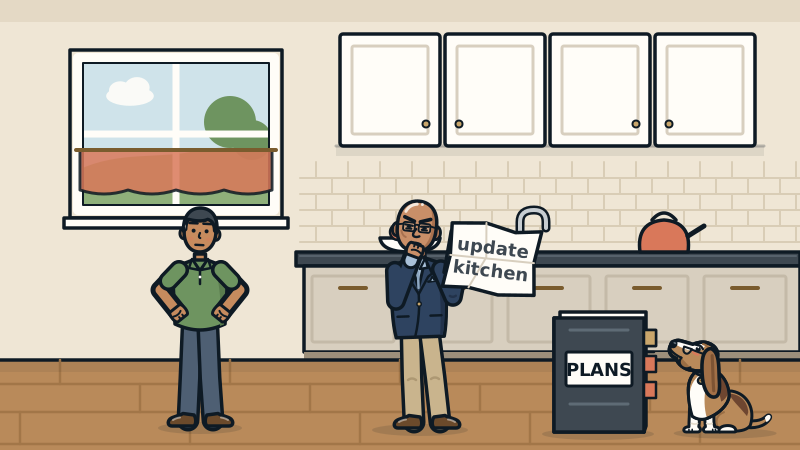
If the scope says "update kitchen," I have no idea whether that means a new faucet or knocking out a wall and adding an island the size of a pickup bed. Those two kitchens do not sell for the same price, and they do not compare to the same sales.
The value of a renovated house comes from comparable sales (comps) of homes already in that finished condition. To pick the right comps, I need to know what finished condition you are building.
Many ARV assignments also carry an as-is value, so I am really valuing two houses at once: the one you bought and the one you are about to create. The plans are the bridge between them. The clearer the bridge, the fewer phone calls we both have to make.
What Fannie Mae requires on a HomeStyle renovation
Fannie Mae's HomeStyle Renovation loan is a good model, because its rules spell out the role of plans. Under Selling Guide B5-3.2-03:
- The appraisal must provide an "as completed" value.
- The plans and specifications must be prepared by a registered, licensed or certified general contractor, renovation consultant or architect.
- The plans should fully describe the work and when each stage is scheduled, including start and completion dates.
- The appraiser must use the plans and specifications in developing the as completed value.
- The lender uses the plans and specifications to determine the amount of financing available.
Changes are handled formally. If the borrower wants to change the original plans, the lender must require a HomeStyle Change Order Request (Form 1200) before approving it. That form describes the changes, their cost and estimated completion dates.
And if something unplanned happens during the work, such as property damage from a natural or manmade disaster, the lender must get an updated appraisal to see whether the changes affect the as completed value.
These are Fannie Mae rules for that loan product. Private and hard money lenders set their own requirements, and the lender's overlays control.
What I ask for on a private ARV assignment
For private lender and investor work, here is my standard list. You do not need an architect's full set for a cosmetic flip, but the more specific you are, the tighter the value.
- Scope of work, line by line. Room by room, what is being replaced, added or removed.
- Finish schedule. Counter material, flooring type, cabinet grade, fixtures, appliances. "Nice" is not a finish.
- Budget. Costs by category. It helps me check that the plan and the money match.
- Plans and drawings if any walls move, square footage changes, or rooms are added.
- Permits or permit applications, especially for additions, bedrooms, bathrooms and garage conversions.
- Timeline with start and completion dates.
- Current photos of the property as it is today.
If square footage is changing, be precise. Added living area is a big driver of value, and "about 400 feet, give or take" gives me nothing to measure.
Why the budget does not set the value
Here is a hard truth for contractors. Spending $200,000 does not create $200,000 of value. The market decides what the finished product is worth, and buyers do not pay you back for invoices.
I use the budget to understand the quality and scope of the work. Then I measure value from what buyers have actually paid for similar finished homes nearby. Buyers react to condition, so a well-done remodel on an older home can compete with newer houses. But a gold-plated remodel in a neighborhood of modest homes usually runs into a ceiling the comps will show you.
Think of it this way: the budget tells me what you are building. The sales tell me what it is worth. Mixing those up is how people end up with a beautiful house and a very awkward conversation with their lender.
The reverse happens too. A smart, modest budget that fixes what buyers care about can produce a strong ARV. The comps do not care how much you spent. They care what you got.
A checklist before you order the appraisal
- Write the scope like a stranger will build it. If your contractor won the lottery and moved to Hawaii tomorrow, could someone else follow it?
- Attach a finish schedule with specific materials.
- Include drawings for any layout or square footage change.
- Separate the budget by category so the scope and the dollars line up.
- Send current photos and give access for the inspection.
- Ask your lender what they require, including any forms, before the order goes out.
- If the plan changes later, tell the lender. A big change can mean the as completed value needs another look.
What I see in the field
The ARV reports that go smoothly all have one thing in common: the plan was specific before anyone called me. The ones that stall usually started with a one-line scope and a lot of enthusiasm.
A good ARV report should teach the investor something. It should show the finished-condition sales, explain why each one fits the plan, and make clear what was assumed about the work. When the plan is clear, the value is clear. When the plan is a vibe, the value is a guess, and nobody should lend on a guess.
Key takeaways
- An ARV values the house as it will be after the work, so the plans define what is being valued.
- Fannie Mae HomeStyle requires the appraiser to use the plans and specs for the as completed value.
- HomeStyle changes go through a change order (Form 1200), and unplanned events like property damage require an updated appraisal.
- The budget explains the work. Sales of similar finished homes set the value.
People also ask
Does the appraiser need a contractor's bid?
Under HomeStyle, the plans must be prepared by a qualified contractor, renovation consultant or architect. For private loans, requirements vary by lender, but a line-item scope and budget always help.
What happens if I change the plans after the appraisal?
On a HomeStyle loan, the lender must require a change order request before approving changes. For private loans, tell your lender, because a significant change can affect the as completed value.
Is ARV the same as as completed value?
They describe the same idea: the value of the property once the planned work is done. Lenders and investors tend to say ARV, while agency guidelines say as completed.
Sources
Got a question we haven't answered?
Suggest a topic or ask your own appraisal question. The best ones become posts.