Do appraisers look in closets, cabinets, the attic and every room?
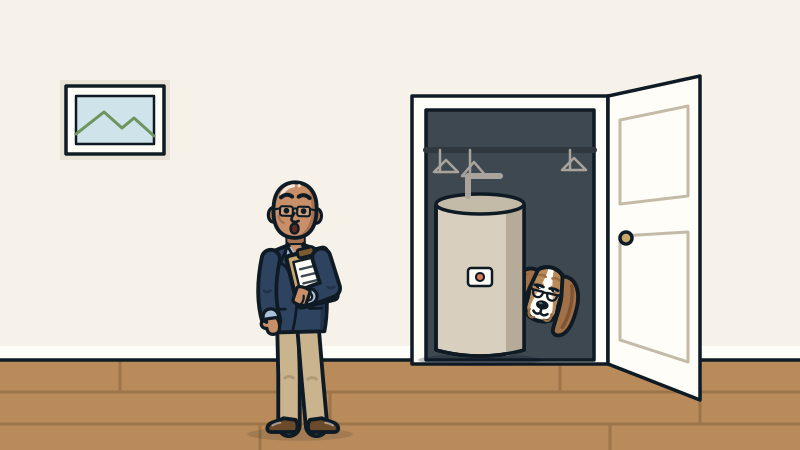
Appraisers need access to every room, because they walk the whole house, count rooms, measure and photograph the interior and exterior. They may glance into closets, cabinets or under a sink, and FHA appraisals call for a look into the attic and crawl space. They don't move furniture, open walls or search your belongings.
Every room, yes. Your sock drawer, no.
An appraiser walks the whole house. Navy Federal's appraisal guide tells owners to make sure there is access to all areas, including all rooms, because the appraiser photographs the inside and outside of the property.
Opendoor describes the walk-through well: the appraiser goes room by room, counts bedrooms and bathrooms, measures, and looks at floors, walls, kitchens, baths and whether the major systems appear to work. For a standard single-family home, Opendoor says the visit usually runs 30 to 60 minutes.
That means the locked spare room matters. So does the bedroom your teenager has declared a sovereign nation. If I can't get in, I can't confirm what's there, and "room not seen" is not a phrase anyone wants in their report.
What I'm not doing is snooping. I don't open dressers, read mail or check whether you alphabetize your spices. I'm there for the real estate, not your stuff.
Closets and cabinets get a quick look, not a search
I might open a closet door. Usually it's for one of three reasons: the water heater or furnace lives in there, I want to see the condition of the walls and floor, or I'm confirming how a room is laid out.
About bedrooms: in my view a room does not need a closet to count as a bedroom. The International Residential Code defines habitable rooms without a closet requirement. Local MLS and lender conventions vary, so what really drives the count is how the room is built and used, things like size, light and ventilation, ceiling height and a safe way out. Don't panic about a missing closet.
Kitchen and bath cabinets are part of the condition of those rooms, so I look at them. Opening one to see the box construction or a water stain is normal. Houwzer notes that appraisers don't always check under the sink, but they can, especially on FHA loans, to look for damage. A small leak under the disposal is a condition note. A rotted cabinet floor is a bigger one.
The attic, basement and crawl space matter for different reasons
Freddie Mac's homeowner guide lists the basement and attic among the things appraisers consider, including whether they're finished or unfinished. Finished space and unfinished space are not valued the same way, so the appraiser needs to see which one you have.
The loan type matters here. On FHA loans, the appraiser looks into the attic and crawl space. HUD has said that when an attic has no floor to walk on, a head and shoulders look, along with an explanation of why the whole attic couldn't be seen, is enough. That is the most glamorous part of my job, assuming you find pink insulation glamorous.
On a conventional loan, Fannie Mae requires the report to identify physical problems that could affect safety, soundness or structural integrity. Signs of water, settlement or damage anywhere in the house, attic and basement included, can turn an "as is" appraisal into one that's "subject to" repairs.
For the dusty spaces, the prep is easy: have the hatch reachable, the basement door unlocked and a clear path to the crawl space opening.
What the appraiser is not doing
People get nervous because they picture an appraiser as a home inspector with a badge. That's not the job.
- No moving furniture. Opendoor puts it plainly: the appraiser won't move furniture, open walls or do anything invasive.
- No hunt for hidden defects. Finding hidden problems is what a home inspection is for. I report what I can see.
- No decor score. Redfin's guide notes the goal isn't to judge whether a home is decorated to the owner's taste. Your gallery wall of vintage lunchboxes is safe from me.
- No grading your housekeeping. Houwzer says appraisers are trained to ignore messes. The catch: extreme clutter that keeps the appraiser from assessing the house forces them to err on the side of caution.
That last one is the real risk. When I can't see a wall, a floor or a furnace, I can't give it credit. Uncertainty never rounds up.
Why a quick look still carries real weight
A walk-through that takes under an hour can feel too casual to matter. It isn't. What I see in those rooms sets the condition rating, and condition is where a lot of value lives.
In the markets I work, buyers react to condition more than to age. A 1960s house with a redone kitchen and baths can outsell a newer house that still has every original builder finish. So the cabinet I open, the floor I look at and the bathroom I photograph all feed the line on the report that can carry real money.
The photos matter too. The underwriter reviewing the file has never stood in your house. They see it through the report. A room I couldn't enter is a blank spot in that story, and blank spots invite questions.
That's the trade. Five minutes of unlocking and clearing saves days of back-and-forth later.
How to get every room ready
- Unlock everything. Bedrooms, offices, garage, side gates, sheds and any detached rooms. Leave keys or codes for anything locked.
- Clear the path to the systems. Electrical panel, water heater, furnace, attic hatch and crawl space opening. If they're inside a closet, make room to open the door.
- Move the boxes off the walls. Stacks that hide walls or floors hide condition, good or bad.
- Fix the small leaks. If there's a drip under the sink, fix it before someone opens the cabinet.
- Put pets away. A dog guarding the hall closet is the most effective lock in the house.
- Hand over a list. Upgrades with dates, like a new roof, water heater or remodeled bath. It helps the appraiser give credit for things a quick look might not show.
Key takeaways
- Appraisers need access to every room because they photograph and measure the home inside and out.
- They may open closets, cabinets or look under a sink, but they don't search belongings or move furniture.
- FHA appraisals include a look into the attic and crawl space, at least head and shoulders.
- Clutter that blocks walls, floors or systems is the real risk, because unseen areas can't get credit.
- Unlocked doors and clear paths to the systems make the visit faster and the report cleaner.
People also ask
Do appraisers open kitchen cabinets?
Sometimes. Cabinets are part of the kitchen's condition, so an appraiser may open one to look at construction or signs of water. They aren't looking at what's on the shelves.
What happens if a room is locked during the appraisal?
The appraiser may have to note that the room wasn't seen, and the lender can ask for a return visit. That can delay your closing.
Will an appraiser climb into the attic?
On FHA loans the appraiser looks into the attic, and a head and shoulders view is accepted when there's no floor to walk on. On other loans it depends on the assignment and what the appraiser needs to see.
Sources
Got a question we haven't answered?
Suggest a topic or ask your own appraisal question. The best ones become posts.