What counts as a bedroom in an appraisal? Does it need a closet?
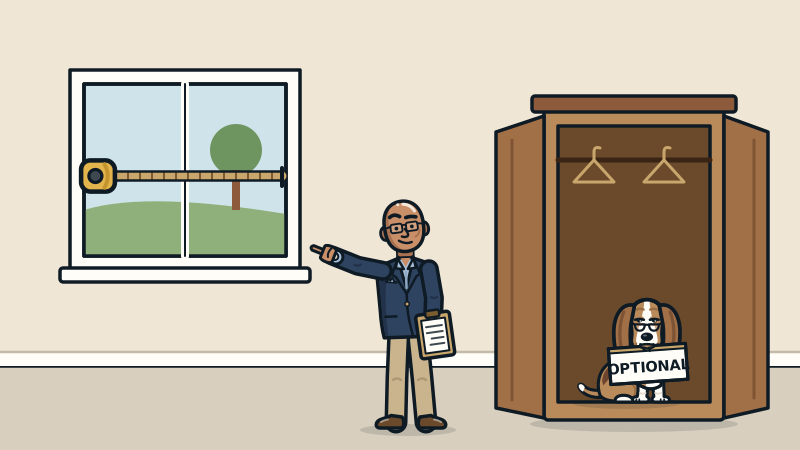
There is no single national definition of a bedroom. Building codes focus on safety, like an emergency escape window, and the International Residential Code does not require a closet. The closet rule is a real estate habit. In my view a room without a closet can count as a bedroom, but local MLS and lender conventions vary.
There is no one national bedroom rule
People are often shocked by this. You would think something as basic as a bedroom would have one clear definition. It does not.
As Bob Vila's guide puts it, there is no national standard for a bedroom. State and local building codes vary, and real estate practice has its own habits on top of that. Fannie Mae does not hand appraisers a bedroom checklist either.
That leaves three different questions that often get mashed together:
- Is it safe and legal? That is the building code question.
- What does the local MLS or lender expect? That is the convention question.
- Do buyers in this market treat it as a bedroom and pay for it? That is the value question, and it is the one an appraisal is really about.
Most bedroom fights happen because two people are answering different questions and both think they are right.
The tax record is a fourth voice in the room, and it is often the least reliable one. Assessor data can be decades old and may never have caught up with a remodel, a conversion or a wall someone took out to make a bigger primary suite. I treat it as a clue, not a verdict.
What building code cares about
Building code is about getting out alive. The International Residential Code, which California builds its residential code on, sets rules for habitable rooms and sleeping rooms. A big one is the emergency escape and rescue opening, usually a window you can climb out of.
Under the California Residential Code, Section R310, an emergency escape opening needs:
- A net clear opening of at least 5.7 square feet (5 square feet for a grade-floor opening)
- A clear opening height of at least 24 inches
- A clear opening width of at least 20 inches
- A sill no higher than 44 inches above the floor
Notice the window has to meet all of these at once. A tall skinny window that is 24 inches high and 10 inches wide does not work, unless you plan to raise very thin children.
Notice also what is not on the list. A closet. The IRC does not require one. A closet is about where you keep your sweaters, not how the fire department gets you out.
Local rules can add more, so check with your city or county building department before you remodel.
Where the closet rule comes from
The closet requirement is a real estate convention, not a code requirement. Bob Vila's guide describes the common real estate definition: a door that closes, a window and a closet. It calls the closet a comfort and livability feature, not a safety one.
Conventions are not nothing. Some local MLS systems expect a closet before an agent can list a room as a bedroom. Some lenders and underwriters ask about it. If you are selling, follow your MLS rules when you write the listing, and talk to your agent about how to describe the room.
My own position as an appraiser: a room does not need a closet to count as a bedroom. The code that defines habitable rooms does not ask for one, and many older homes were built before built-in closets were common. A 1920s bungalow with wardrobes instead of closets still has bedrooms. People have been sleeping in them for a hundred years, and none of them slept in the closet.
What I will not do is count a room as a bedroom when it fails on safety or legality.
What actually drives the bedroom count in an appraisal
When I decide how to count a room, here is what I weigh:
- Safety. Is there a proper emergency escape opening?
- Legal status. Was the room built or converted with permits? A garage turned into a bedroom without permits raises different questions than an original bedroom.
- Living area. Is the room in the finished, above-grade living area, or in a basement or a detached structure? A bedroom in a detached cottage belongs with the cottage, not the main house.
- How the market treats it. Do buyers in this area pay for an extra bedroom, and do comparable homes count similar rooms the same way?
That last point is where the money is. Bedroom adjustments should come from real sales, like paired sales of similar homes with and without the extra room, not from a flat number someone made up years ago. In some markets a third bedroom is worth a lot. In others, a fourth bedroom matters less than the size of the house. The count has to be consistent, too. If I count a no-closet room as a bedroom in the subject, I count the same kind of room the same way in the comps.
What to do before you list or get appraised
- Measure your windows. Check the clear opening, height, width and sill height against the code rules above.
- Find your permits for any converted room. Bring them to the appraisal.
- Check your MLS rules before you call a room a bedroom in the listing.
- Don't add a cheap closet just to win an argument. If the room is safe and legal, explain how it is used. If it isn't, a closet won't fix that.
- Write a one-page room list for the appraiser: each room, how it is used, and any permits or upgrades.
- Be consistent with your own records. If the tax record, the listing and your fact sheet all count rooms differently, expect questions.
Key takeaways
- There is no single national definition of a bedroom.
- Building code focuses on safety, like an emergency escape window.
- The IRC does not require a closet. The closet rule is a real estate convention.
- Permits, safety and how the market treats the room drive the count.
- Follow your local MLS rules when you write a listing.
People also ask
Does a bedroom need a window to count?
For a sleeping room, building code calls for an emergency escape opening. Under California Residential Code R310, that opening must meet minimum size and a maximum 44-inch sill height.
Is a basement bedroom counted in an appraisal?
It may still be a bedroom, but on most conventional appraisals the room is in basement area, not above-grade living area. It is reported separately and adjusted based on the market.
Can I call a den a bedroom in my listing?
Follow your local MLS rules and be accurate. If the room is safe and legal and buyers treat it as a bedroom, explain that, and give the appraiser the facts.
Sources
Got a question we haven't answered?
Suggest a topic or ask your own appraisal question. The best ones become posts.