Does the age of a house matter in an appraisal, or only condition?
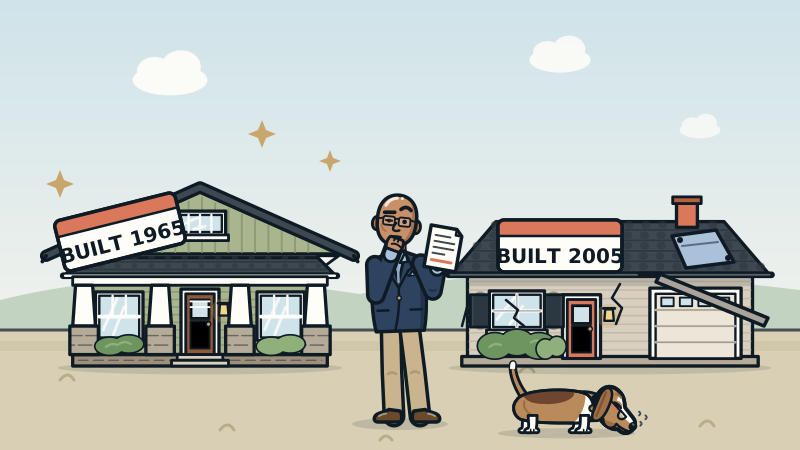
Both show up in an appraisal, but condition usually does the heavy lifting. Actual age is how many years since the house was built. Effective age is the appraiser's estimate based on condition and updates. A well maintained home generally has an effective age below its actual age, and any adjustment for year built must be explained.
Actual age is a birthday. Effective age is how the house acts.
Actual age is simple math. A house built in 1965 is about 60 years old, no matter how many times it has been painted.
Effective age is the appraiser's estimate of how old the house acts, based on its condition and how much has been updated. A 1965 house with a new roof, new systems and a rebuilt kitchen might have an effective age of 15 years. A 2005 house that has been rented hard with no upkeep might act older than its birth certificate.
Fannie Mae does not restrict the actual age of a home. Older homes that meet its general requirements are acceptable. Nobody gets turned away at the door for being born before the moon landing.
What Fannie Mae does care about is the relationship between the two numbers, because that relationship says a lot about how the house has been treated.
What the gap between the two numbers tells a lender
Fannie Mae calls the relationship between actual and effective age a good indication of condition. It reads two ways:
- Effective age lower than actual age: the home has generally been well maintained.
- Effective age higher than actual age: the home probably has not been well maintained, or it may have a particular physical problem. In that case, Fannie Mae tells the lender to pay particular attention to the condition of the property.
The condition ratings line up with this. Fannie Mae's definition of C3 (well maintained, limited wear) says the estimated effective age is less than the actual age. Its C4 definition (some minor deferred maintenance, normal wear) says effective age may be close to or equal to actual age.
In plain terms, an effective age older than the house itself is a little red flag waving at the underwriter. Like a 30-year-old with a 70-year-old's knees.
Buyers pay for condition more than for birthdays
In the markets I work, buyers react to condition more than to age. A remodeled 1960s ranch with a new kitchen, new baths and updated systems can sell for more than a tired 2005 house with every original builder finish still hanging on.
That is why I do not like an age adjustment that runs on autopilot. A rule like "take off so much per year" assumes every older house is worn out. Plenty are not. Plenty of newer ones are.
Fannie Mae makes a related point about newer homes. Houses 15 years old or less often show their original condition with no updating, and that does not by itself mean deferred maintenance. A 12-year-old house with original counters is not a problem house. It is just a house that has not been remodeled yet.
Condition is rated on the property as a whole, not on its best or worst room. One fancy bathroom does not turn a tired house into a C2, and one scuffed hallway does not sink a C3.
When age does get its own adjustment
Sometimes age matters on its own. Older construction methods, outdated floor plans or a buyer pool that prefers newer homes can show up in the sales. When that happens, an appraiser may adjust on the Year Built line of the sales comparison grid. Fannie Mae requires the appraiser to explain any Year Built adjustment.
Here is how I approach it. If an adjustment is based on age, it goes on the age line, so nobody has to guess what it is for. If it is based on condition, it goes on the condition line. Putting the same difference on both lines charges the house twice for one thing, like a restaurant that bills you for the steak and then for chewing it.
The amount should come from real sales, not a rule of thumb. Paired sales help: two similar homes that sold around the same time where the main difference is age, or the main difference is condition. Checked against the wider market, those pairs show whether buyers in that area pay for the year, the updates, or both.
What I see in the field
Sellers tend to make one of two mistakes about age, and they point in opposite directions.
The first is assuming an older house is automatically worth less than a newer one down the street. If the older house has been kept up and updated, the sales often say otherwise. The year on the tax record is a fact. It is not a verdict.
The second is assuming that a few cosmetic touches erase decades. Fresh paint over a 40-year-old roof and an original furnace does not make a house act young. Buyers and their inspectors look past the paint, and so do I.
Effective age is an estimate, and I treat it like one. I base it on what I can see and verify: the systems, the finishes, the permits and the dates you give me. Then I check the result against what buyers in that neighborhood actually paid for similar homes in similar shape. The number on the page should be one you could defend at the kitchen table.
How to show the appraiser your house's real age
You cannot change the year your house was built. You can make its condition easy to see and easy to prove.
- Make a list of updates with dates: roof, windows, heating and cooling, water heater, electrical panel, plumbing, kitchen, baths, flooring.
- Pull permits and receipts for the big items. A date on paper beats a date from memory.
- Fix the small stuff that reads as deferred maintenance: drips, cracked outlet covers, loose railings, peeling exterior paint.
- Give access to the attic, crawl space, panel and water heater so updates can be seen and not assumed.
- Be accurate. If the kitchen was redone in 2009, say 2009. Overstating updates backfires when the photos tell a different story.
Facts over feelings. A clear record of what was done, and when, is how a 1965 house earns a younger effective age.
Key takeaways
- Actual age is years since construction. Effective age is the appraiser's estimate based on condition and updates.
- Effective age below actual age signals a well maintained home. Above it draws extra lender scrutiny.
- Buyers tend to pay for condition more than age, so updates and upkeep matter most.
- Any Year Built adjustment must be explained, and it should not double count a condition difference.
People also ask
Is there a maximum age for a house to get a conventional loan?
Fannie Mae places no restriction on the actual age of a home. Older homes that meet its general requirements are acceptable.
Does remaining economic life matter on a Fannie Mae appraisal?
Fannie Mae has no requirement related to remaining economic life, and appraisers are not required to report it. Any related property deficiencies still have to be discussed in the report.
Can a newer house get a lower condition rating than an older one?
Yes. Condition ratings describe how the home is maintained and updated, not when it was built. A neglected newer house can rate below a well kept, updated older one.
Sources
Got a question we haven't answered?
Suggest a topic or ask your own appraisal question. The best ones become posts.