How is an FHA appraisal different from a conventional appraisal?
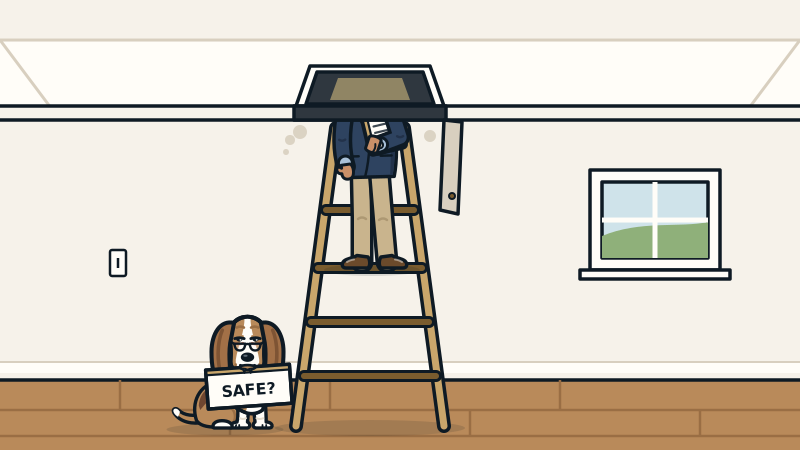
Both appraisals estimate market value the same way, using comparable sales. The difference is that an FHA appraisal also checks the home against HUD's Minimum Property Requirements, so the house must be safe, sound and secure, and needed repairs get written up. FHA appraisals are good for 180 days; conventional rules use a 4 and 12 month framework.
Both appraisals answer the same value question
Here is the part people miss. The value side of an FHA appraisal and a conventional appraisal works the same way. I find comparable sales (comps), which are similar homes that sold nearby, and I adjust them for the differences buyers actually pay for. Then I reconcile to a value.
FHA does not get a discount on the math. A house is not worth less because the buyer put 3.5% down. The market does not check your loan type at the door.
What changes is the second job. On an FHA loan, the appraiser is also checking the house against HUD's property rules. The appraiser has to be on HUD's FHA Appraiser Roster to take that assignment, and HUD manages who stays on that list. Think of it as the same exam with an extra page stapled to the back.
FHA adds a safety checklist on top of value
HUD's Minimum Property Requirements say every FHA-insured home must be safe, sound and secure. That sounds broad, so here is what it means in practice. Each living unit needs:
- A continuing supply of safe drinking water under adequate pressure
- Sanitary facilities and a safe way to get rid of sewage
- Heat adequate for healthful and comfortable living
- Hot water
- Electricity adequate for lighting, cooking and the unit's equipment
- At least one bathroom with a toilet, a sink and a tub or shower
HUD also wants the structure to be serviceable for the life of the mortgage. On homes built before 1978, chipped or peeling paint has to be dealt with because of lead hazards.
The appraiser's job is to note all repairs needed to bring the property up to HUD's standards. If the appraiser can't tell whether a house meets them, the lender can order an inspection. FHA appraisers also look into the attic and crawl space. When there is no floor to walk on, HUD has said a head and shoulders look, plus an explanation, is enough. Yes, that means me on a ladder with my head in your insulation, which is about as glamorous as it sounds.
Conventional appraisals still care about safety, with a different bar
A conventional loan sold to Fannie Mae is not a free-for-all. Fannie Mae's guide allows an appraisal to be done "as is" when existing conditions are minor and don't affect safety, soundness or structural integrity.
Minor stuff, like normal wear and tear, still gets reported. It just usually does not rise to a required repair. A scuffed hallway or a tired faucet is a note in the report, not a deal stopper.
When a problem does affect safety, soundness or structural integrity, the appraisal goes "subject to" the repair. If any part of the house rates C6, the lowest condition rating, the whole house rates C6 and the appraisal must be subject to fixing it. Fannie Mae requires those items repaired to at least a C5 rating before the loan can be sold.
The practical difference: FHA walks in with a specific checklist and writes up anything on it. Conventional asks a bigger question, "Is this safe and sound?", and lets minor wear ride.
How long each appraisal stays good
The shelf life is different too, and this catches people when a closing slips.
| Loan type | Basic rule | Update option |
|---|---|---|
| FHA | Valid 180 days from the appraisal's effective date | An update before disbursement keeps it good for one year from the original effective date |
| Conventional (Fannie Mae) | Appraisal must be within 12 months of the note date | If it is more than 4 months old at the note date, the appraiser does an update with an exterior look and fresh market data |
HUD set the 180-day period in Mortgagee Letter 2022-11, up from 120 days, and dropped the old optional 30-day extension. On the Fannie Mae side, if the update shows the value declined, the lender needs a new appraisal. A Fannie Mae desktop appraisal is stricter: past four months, it needs a new one.
Your lender may have its own overlays, so ask early. Escrows that drag on are like houseguests. Everything is fine until about day 175.
The repairs that tend to come up on FHA deals
Redfin's guide to the appraisal process lists the kinds of items that can surface on an FHA appraisal: deteriorating paint, roof or foundation problems and water damage. Those match what HUD's rules target. Paint matters more on older homes because of lead hazards, and water and structure tie straight back to "safe, sound and secure."
What I see in the field is that FHA write-ups rarely surprise anyone who walked the house with open eyes. Peeling trim, a brown ring on the ceiling, a water heater with a story to tell. The surprise is usually that nobody fixed them before listing.
Here is the important part for sellers: a repair condition does not lower the value by itself. The value is the value. The repair is a condition the lender needs met before closing. Who pays for it is a negotiation between buyer and seller, not something the appraiser decides.
Facts over feelings applies here too. I am not calling the paint ugly. I am calling it loose.
What to do if you're buying with an FHA loan
- Walk the house with HUD's list in mind. Water, sewer, heat, hot water, electricity and one full bathroom. If anything on that list is off, flag it before you write the offer.
- Look at the paint on older homes. Chipping or peeling paint is one of the most common items to come up. Ask the seller about it early.
- Make sure the attic and crawl space can be reached. Nothing stacked on the hatch, no padlock nobody has a key for.
- Write repair terms into the contract. Decide ahead of time who handles required repairs and how the reinspection gets scheduled.
- Watch the calendar. If closing might slide past 180 days from the appraisal's effective date, ask your loan officer about an update before it lapses.
- Ask for a copy of the report. Read the repair section. It tells you exactly what the lender will want to see fixed.
Key takeaways
- FHA and conventional appraisals estimate value the same way, from comparable sales.
- FHA adds HUD's safe, sound and secure checklist, and the appraiser writes up needed repairs.
- Conventional appraisals can stay "as is" for minor wear but go "subject to" for safety or structural problems.
- FHA appraisals last 180 days; Fannie Mae uses a 4 month update and 12 month limit.
- A repair condition is a to-do item for closing, not a cut in value.
People also ask
Is an FHA appraisal harder to pass?
It has more specific property requirements, so homes with safety or utility problems are more likely to get repair conditions. The value side is not tougher than a conventional appraisal.
Can a seller refuse to make FHA repairs?
Yes, a seller can say no. Then the buyer can pay for the repairs if the lender allows it, renegotiate, switch loan types, or walk away under their contract terms.
Does an FHA appraisal replace a home inspection?
No. The appraiser checks the home against HUD's minimum requirements and estimates value. A home inspector goes much deeper into systems and defects, and you should still hire one.
Sources
- HUD Handbook 4000.1, Property Acceptability Criteria (Minimum Property Requirements)
- HUD Mortgagee Letter 2022-11: Revised Appraisal Validity Periods
- Fannie Mae Selling Guide B4-1.3-06: Property Condition and Quality of Construction
- Fannie Mae Selling Guide B4-1.2-04: Appraisal Age and Use Requirements
- Redfin: The Home Appraisal Process
Got a question we haven't answered?
Suggest a topic or ask your own appraisal question. The best ones become posts.