Does a 3% assumable loan make a house worth more?
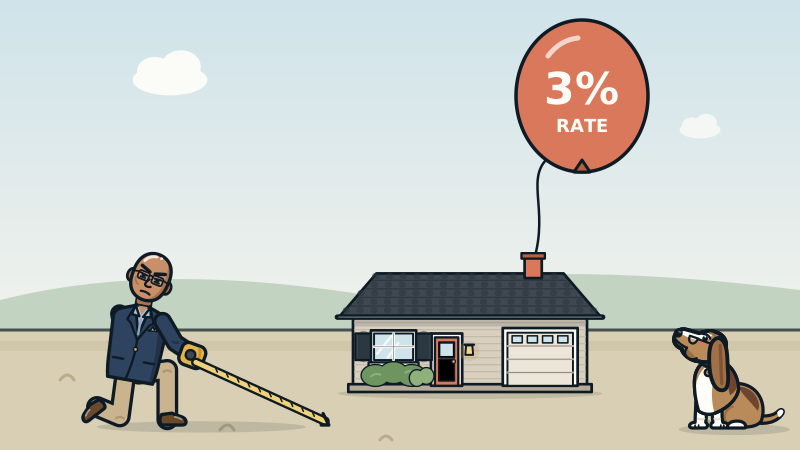
Not the house itself. Market value assumes cash or normal financing, unaffected by special or creative financing. A low-rate assumable loan can lead a buyer to pay more for the package, but that extra belongs to the loan, not the real estate. An appraiser treats it as a financing benefit and adjusts only for what sales prove buyers paid.
The house and the loan are two different things
A seller with a 3% loan in a 6% world has something buyers want. That is real. The question is what exactly they have.
Fannie Mae's definition of market value assumes payment in cash or in financial arrangements comparable to cash, and a price that is "unaffected by special or creative financing or sales concessions." In plain words, market value is the price of the house with ordinary financing. A great loan riding along with it is a separate thing.
Think of it like a used car that comes with a free year of gas. Buyers may pay more for that deal. Nobody thinks the car itself got faster.
That is my position, and it lines up with the rules: the house is valued on its own. If anyone wants to claim a premium for the loan, prove it from sales.
How FHA and VA assumptions work
An assumption means the buyer takes over the seller's existing loan, rate and all. FHA and VA loans can be assumed, with approval.
- FHA. For FHA loans closed on or after December 15, 1989, HUD requires the buyer's credit to be approved under HUD rules. The seller can be released from liability through the lender once the buyer is approved.
- VA. VA says an assumption must be approved if the loan is current, the buyer agrees to buy the home and take on full liability, and the buyer is creditworthy. The VA funding fee for an assumption is 0.5%.
- The VA seller's catch. Unless an eligible veteran buyer who will live there substitutes their own entitlement, the seller's VA entitlement stays tied up in that loan until it is paid in full. That can limit the seller's next VA purchase.
The buyer also has to cover the gap between the price and the loan balance, in cash or with other financing. Loan officers should check program rules and the servicer's timeline before anyone promises a closing date.
A hypothetical to show where the money is
Here is a made-up example. Say a house is under contract at $800,000. The seller's assumable loan has a balance of $450,000 at 3%, with 25 years left. Payment math below is principal and interest only, rounded.
| Assume the 3% loan | New 30-year loan at 6.5% | |
|---|---|---|
| Loan amount | $450,000 | $450,000 |
| Monthly payment | About $2,134 | About $2,844 |
| Cash or other financing for the rest | $350,000 | $350,000 |
On those assumptions, the assumption saves about $710 a month on the same balance. That is a real benefit. But look at what it is attached to. It belongs to that loan, it ends when the loan is paid off or refinanced, and it comes with a $350,000 check the buyer has to write or finance somewhere else.
None of that changed the roof, the kitchen or the lot. The house is the same house. The financing is what got better.
How an appraiser handles an assumable sale
Once that sale closes, it becomes someone else's comparable sale (comp). Now the next appraiser has to ask whether the price included money for the loan.
Fannie Mae's list of sales and financing concessions includes interest rate buydowns and "other below-market rate financing." The guide does not use the word "assumption," so the appraiser has to explain the call. But a 3% loan in a 6.5% market is below-market financing in any plain reading.
The rules on how to adjust are clear:
- The negative adjustment should equal the increase in price the financing caused.
- A dollar-for-dollar deduction equal to the cost of the concession is not appropriate unless the market's reaction was the full amount.
- Positive adjustments for financing are not acceptable. A comp with ordinary financing never gets bumped up.
In the hypothetical, the buyer saves about $710 a month. That does not mean the price went up by the present value of $710 a month. Maybe buyers paid some of it. Maybe they paid none, because they wanted the house anyway. I measure it by comparing assumable sales with similar ordinary sales nearby, close in time, after other differences are adjusted. More on that method in why seller credits are not dollar for dollar.
How to market an assumable loan honestly
- Price the house on house sales. Use comps with ordinary financing to set the value of the real estate.
- Market the loan as a payment benefit, with the rate, balance and years left. Do not call it a higher home value. It is not.
- Put the financing in the MLS when the sale closes. A hidden assumption makes the next appraisal in the neighborhood worse, and the next seller pays for it.
- Tell the appraiser through the proper channel if the contract involves an assumption, so it gets analyzed instead of discovered.
- Plan the equity gap early. Loan officers, line up how the buyer will cover the difference before the offer goes in.
- Warn VA sellers about entitlement. A great sale today can cost them their next VA purchase if no substitution happens.
- Get the servicer's process in writing. Assumptions run through the servicer, and their timeline is the one that counts.
A 3% loan is a great selling point. It is just not a new bathroom.
What I see in the field
When rates jump, every agent with an assumable listing wants the low rate to show up in the appraisal. I understand why. But the appraisal is about the real estate, and the contract price does not set value. One buyer paying extra for a loan does not tell me the whole market will pay extra for the house.
What I can do is show the evidence. If assumable sales in an area really closed higher than similar ordinary sales, that pattern belongs in the analysis and gets measured. If they did not, the loan was a nice perk and nothing more. Facts over feelings, even when the feelings come with a 3% rate.
Tax and legal questions about liability or entitlement belong with the borrower's attorney or the VA, not with me.
Key takeaways
- Market value assumes ordinary financing, so a cheap loan does not make the house worth more.
- FHA and VA loans can be assumed with approval, and the buyer still has to cover the equity gap.
- Below-market financing on a comp is analyzed as a financing concession.
- Any adjustment equals what buyers actually paid for the loan, measured from sales, never positive.
- Market the loan as a payment benefit and price the house on house sales.
Get the best posts once a week.
Priced Right is one email a week with the most useful appraisal and pricing posts and what the market is doing. Never more than one a week. Unsubscribe anytime.
People also ask
Can a seller list the house higher because the loan is assumable?
They can ask for more, and a buyer may pay it for the payment savings. The appraised value of the house is still based on sales with ordinary financing.
Are conventional loans assumable?
Check the loan documents and ask the servicer. This post covers FHA and VA assumptions, which HUD and VA allow with approval.
Does the VA seller get their entitlement back after an assumption?
Only if an eligible veteran buyer substitutes their own entitlement. Otherwise VA says it stays tied to the loan until it is paid in full.
Sources
Got a question we haven't answered?
Suggest a topic or ask your own appraisal question. The best ones become posts.