Does California rent control (AB 1482) lower a duplex's value?
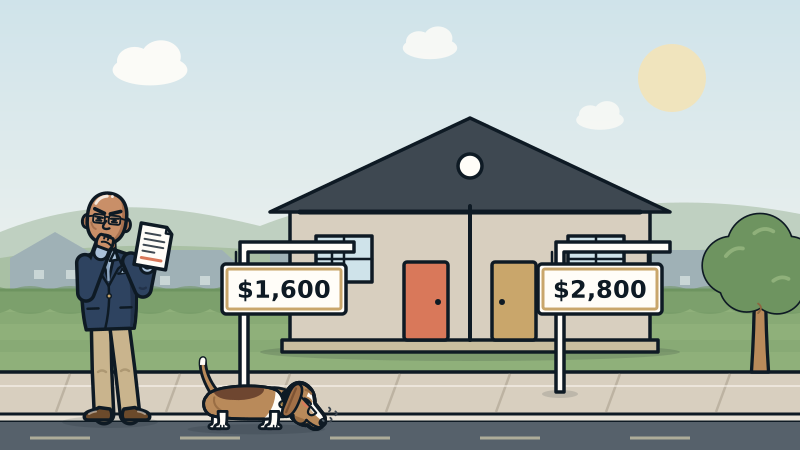
Under California's Tenant Protection Act, AB 1482 (Civil Code sections 1947.12 and 1946.2), most duplexes over 15 years old cap yearly rent increases at 5% plus inflation, never more than 10%, and require just cause to evict. It can lower value when in-place rents sit below market, but that effect has to be measured from local sales, not assumed.
What AB 1482 actually limits
AB 1482 is the Tenant Protection Act of 2019. It does two big things for covered units: it caps rent increases and it requires a legal reason, called just cause, to end a tenancy.
The cap is in Civil Code section 1947.12. Over any 12 months, rent can go up by no more than 5% plus the change in the regional cost of living (CPI), or 10%, whichever is lower. The math starts from the lowest rent charged in the prior 12 months, and you get at most two increases in that period. When a unit turns over and no prior tenant remains, the owner can set the new starting rent. The cap applies from there.
For increases from August 1, 2026, Los Angeles County's consumer affairs department lists 8.7% for most of the Los Angeles area, and San Francisco lists 8.8% for San Francisco. Those figures reset each August with the CPI.
Just cause is in Civil Code section 1946.2. The Attorney General's guide says it kicks in after a tenant has been there a year. For a no-fault ending, like an owner move-in or a substantial remodel, the owner owes relocation help equal to one month's rent. SB 567 tightened these rules starting April 1, 2024. The rent cap section is set to expire January 1, 2030, unless lawmakers extend it.
Which duplexes are exempt, and the trap for buyers who move in
The exemptions are where duplex owners get confused, so read the statute's words, not the open house flyer.
- Newer buildings. Housing that got its certificate of occupancy within the previous 15 years is exempt. That window rolls. A duplex finished in 2012 becomes covered in 2027, whether or not anyone throws it a party.
- Owner-occupied duplexes. Two units in one structure are exempt if the owner lived in one unit as a principal residence at the beginning of the tenancy and still lives there. The statute says this does not apply if either unit is an ADU or junior ADU.
- Single-family homes and condos can be exempt if the owner is not a REIT, a corporation or an LLC with a corporate member, and the tenant got the written notice the statute spells out.
Now the trap. Say you buy a duplex with a tenant in Unit B and move into Unit A. That tenant's tenancy began before you lived there. The owner-occupied exemption is tied to the beginning of the tenancy, so it does not cover that tenant. It can cover the next tenant who moves in while you live next door.
That one detail can change what a house-hacking buyer is really getting. Ask your attorney before you count on any exemption.
City and county rent laws sit on top of the state law
AB 1482 is the floor, not the whole building. The Attorney General's list of local rent laws includes Oakland, Berkeley, Hayward, San Francisco, San Jose, Mountain View, East Palo Alto, Richmond, Los Angeles, Santa Monica, Pasadena, Santa Ana, Palm Springs, the City of Sacramento and unincorporated Los Angeles County, among others.
Where a local law caps increases below the state cap, the unit follows the local rule. The gap can be big. For most fully covered units in unincorporated Los Angeles County, the county lists a maximum increase of 1.919% through June 30, 2027.
Local caps have limits of their own. The Attorney General notes they generally do not apply to buildings with a certificate of occupancy issued after February 1, 1995, or to units that can be sold separately, like most single-family homes and condos. That limit comes from the Costa-Hawkins Rental Housing Act (Civil Code section 1954.50 and following). The City of Los Angeles Rent Stabilization Ordinance covers most rental property first built on or before October 1, 1978, including duplexes and two or more houses on one parcel.
The result: a 1925 Oakland duplex, a 1999 Oakland duplex and a 2015 Oakland duplex can live under three different sets of rules. Same street. Same tacos nearby. Different rent math.
How rent limits show up in value
For Fannie Mae loans, the income approach is required on two- to four-unit properties. The appraiser supports a market rent and uses a gross rent multiplier (GRM), which is the sale price divided by the monthly rent, from similar sales. The full 2–4 unit process is here.
Rent control enters through the gap between what a tenant pays now and what a new tenant would pay. Here is a hypothetical. A duplex unit has a long-term tenant at $1,600 a month. Similar vacant units rent for $2,800. Under a tight local cap, that $1,200 gap may shrink slowly, or not at all, until the tenant leaves on their own.
Run that gap through a GRM of 160 and it looks like $192,000 on paper. I would not put that number on a report. Real buyers do not price it that cleanly. Some expect turnover in a few years. Some are owner-occupants who need a vacant unit and will not bid at all. The real answer depends on who is buying in that neighborhood right now.
That is why the effect has to be measured. I compare duplexes that sold with below-market tenants to similar duplexes that sold vacant or at market rent, and I check the GRM on in-place rent against the GRM on market rent. Paired sales, which are two sales that differ mainly in one feature, show what the tenancy cost. A rule of thumb does not. Facts over feelings, even when the feelings come with a spreadsheet.
What I see when sellers and buyers argue about it
Sellers of tenant-occupied duplexes often believe the market will pay for the rent the building could get. Buyers often believe the tenant is a permanent discount. Both are guessing, and both are usually wrong in opposite directions.
The listing price does not settle it, and neither does the contract. One buyer and one seller is not the whole market. What settles it is the record: rent rolls, lease dates, which rules cover the building, and what similar buildings with similar tenancies actually sold for.
A good report should teach that. It should say which rent law applies, which rents are in place, what market rent is, and how the local sales priced the difference. If an appraisal just copies the rent roll and multiplies, it skipped the most important part of the property.
What to do before you buy or sell a duplex
- Find the certificate of occupancy date. It decides the 15-year exemption and whether a local cap can apply.
- Confirm the jurisdiction. City limits and unincorporated county areas can follow different rent laws.
- Collect 12 months of rent history for each unit, including any discounts, since the cap starts from the lowest rent charged.
- Get the lease start dates and compare them to when any owner lived on site.
- Ask for any exemption notices given to tenants, and keep copies.
- Get an appraisal that measures the tenancy from local sales instead of assuming a discount.
- Call a landlord-tenant attorney before you plan an owner move-in, remodel or rent increase.
If your duplex is in the East Bay, here is how I work as an Alameda County appraiser.
Key takeaways
- AB 1482 caps most covered rent increases at 5% plus CPI, never above 10%, and requires just cause after a year.
- The owner-occupied duplex exemption depends on the owner living there when the tenancy began.
- Local rent laws in cities like Oakland, Berkeley, San Francisco and Los Angeles can be stricter than the state cap.
- Below-market rents can lower value, but the size of the effect comes from local sales, not a rule of thumb.
Getting this answered in California
Duplexes covered by both AB 1482 and a stricter local rent law are common in older neighborhoods of Oakland, Berkeley, San Francisco and Los Angeles, which all appear on the Attorney General's list of local rent laws. I am a California Certified Residential Appraiser (License AR041465) and appraise homes statewide, including Alameda County, San Francisco County, Los Angeles County, Santa Clara County, Contra Costa County. See every area I serve.
Get the best posts once a week.
Priced Right is one email a week with the most useful appraisal and pricing posts and what the market is doing. Never more than one a week. Unsubscribe anytime.
People also ask
Is a duplex exempt from rent control in California?
Sometimes. Under AB 1482, a duplex in one structure is exempt if the owner lived in one unit when the tenancy began and still lives there, and neither unit is an ADU. Duplexes with a certificate of occupancy in the last 15 years are also exempt, but local rent laws may still apply.
How much can a landlord raise rent on a duplex in California in 2026?
Under AB 1482, the most is 5% plus regional CPI, capped at 10%. For increases from August 1, 2026, Los Angeles County lists 8.7% for most of the Los Angeles area, and San Francisco lists 8.8%. A stricter city or county rent law can set a lower limit.
Does rent control lower property value in California?
It can, when tenants pay well below market and the rules keep that gap in place. How much depends on the buyers in that market, so an appraiser should measure it with local sales of similar buildings.
If I buy a duplex and move into one unit, is it exempt from AB 1482?
Not for a tenant who was already there. The exemption requires the owner to have lived in the other unit at the beginning of the tenancy. It can apply to tenants who move in after you do.
Sources
- California Civil Code section 1947.12 (Tenant Protection Act rent cap)
- California Attorney General: Tenant Protection Act guide for landlords and property managers
- California Attorney General: Local rent laws chart
- Los Angeles County DCBA: Understanding rent increases
- San Francisco: California Tenant Protection Act of 2019 (AB 1482)
- Los Angeles Housing Department: What is covered under the RSO
Got a question we haven't answered?
Suggest a topic or ask your own appraisal question. The best ones become posts.