How is a manufactured home on land appraised?
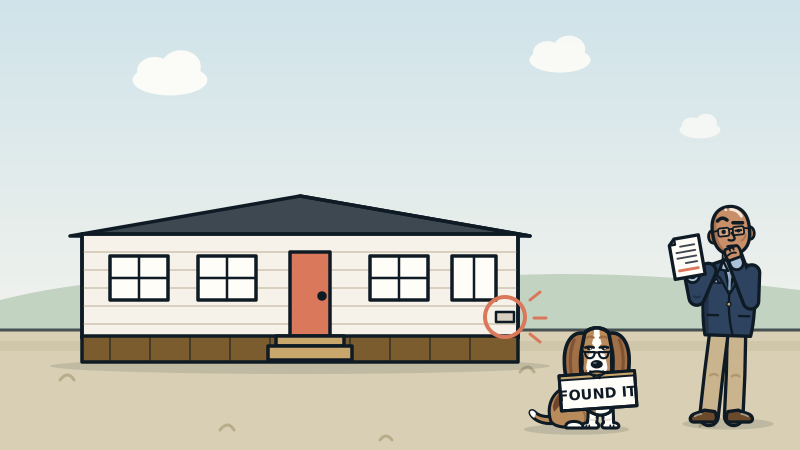
It is appraised as real estate, the home and the land together, once it sits on a permanent foundation and is legally classified as real property. For Fannie Mae loans, at least two comps must be manufactured homes and a detailed cost approach is required. The appraiser also checks the HUD labels, foundation and title paperwork.
First question: is it a house or a vehicle?
A manufactured home is built in a factory on a steel chassis to a federal code, the HUD code, instead of a local building code. Until it is attached to land the right way, the law can treat it more like a vehicle than a house.
Lenders that sell to Fannie Mae need the home and the land to be legally classified as real property under state law. Personal property titles are not eligible. FHA's rule says the home and its site must be classified and taxed as real estate.
In California, the switch usually runs through a form called the HCD 433A. The local building department issues the foundation permit, inspects the work, and records the 433A with the county recorder. The state housing department then cancels the home's registration and marks it as permanently affixed. After that, the county taxes it like a site-built home.
If the 433A was never recorded, the home is still personal property with a state title, no matter how many decks and rose bushes surround it. The roses are real property. The house may not be.
What lenders require before value even matters
For a Fannie Mae loan, the home must:
- Be built to the federal manufactured home standards established June 15, 1976, shown by a HUD Data Plate or HUD Certification Labels
- Be at least 12 feet wide with at least 400 square feet of finished area above grade
- Have the towing hitch, wheels and axles removed
- Sit on a permanent foundation that follows the manufacturer's anchoring and support requirements and local codes
- Not have been installed or lived in at another site, unless it came new from the factory or dealer's lot
- Be one unit with no ADU, hooked up permanently to sewer or septic and utilities
The loan must be secured by both the home and the borrower's interest in the land. A single-wide can work as a principal residence. A second home must be multi-width, and investment properties are not eligible.
FHA has its own list. Its regulation calls for at least 400 square feet, a HUD certification label, removal of the hitch and running gear, and a finished grade at or above the 100-year flood elevation. FHA also requires a foundation certification from a licensed professional engineer or registered architect showing the foundation meets HUD's Permanent Foundations Guide for Manufactured Housing.
VA, USDA and portfolio lenders each set their own rules. Ask the lender which ones apply before anyone orders anything.
Why the comps should be manufactured homes
Buyers do not always pay the same for a manufactured home as for a site-built house of the same size on the same road. Financing, perception and construction all play a part. The way to know how much it matters is to look at what manufactured homes actually sold for.
Fannie Mae's rules, updated in February 2026, say:
- At least two comparable sales (recent sales of similar homes) must be manufactured homes.
- For a single-wide, one comp should be a closed single-wide sale when one is available. If none exists, an active or pending single-wide listing can be added to show how the market treats them.
- The third comp may be site-built or another type of factory-built home, but the appraiser must explain why and support the adjustments.
- No making comps by adding a vacant land sale to a home's contract price.
- A detailed, supported cost approach is required for every manufactured home, with enough detail that the lender could repeat the math.
The appraiser values only the real property: the home, the site improvements and the land. Furniture, warranties and insurance are not part of it, even if they came in the same deal. The sofa was nice. It is not real estate.
A modular home is a different animal. It is built to local building codes, and Fannie Mae treats it like a site-built house, so the comps do not have to be modular. I cover that in how an ARV appraisal is built.
The labels, the plate and the paperwork
Every manufactured home has two kinds of ID. The HUD Certification Label is a small metal plate, about 2 by 4 inches, fixed to the outside of each section. The Data Plate is a paper label inside, usually in a kitchen cabinet, the electrical panel or a bedroom closet. It lists the maker, serial number and the wind, snow and roof load zones the home was built for.
Fannie Mae requires photos of the Data Plate or the labels in the appraisal. I will ask you where they are, and I will be on my knees looking for them. It is not my most dignified moment.
If the labels are gone, HUD does not reissue them. HUD can provide a Letter of Label Verification if the records exist, through the Institute for Building Technology and Safety. Start that early, because a missing label can stop a loan cold.
One more paperwork note for loan officers: Fannie Mae's guide still names Form 1004C, the manufactured home report. Under UAD 3.6, Freddie Mac lists the 1004C among the forms being retired. Reports first submitted on or after November 2, 2026 use the redesigned URAR, explained in this post on the new URAR.
What I see in the field, especially on acreage
Many manufactured homes in California sit on rural land. That brings two challenges: few sales, and land that does a lot of the work in the value.
When recent manufactured sales nearby are thin, I go back in time before I go farther away. An older sale of a similar home on similar land, adjusted to today's market, often tells me more than a fresh sale 40 miles off in a different market.
On acreage, I also look at what the land itself brings: usable area, access, well and septic, and whether a buyer could build something else. Five flat acres and five acres of hillside are both five acres the way a recliner and a ladder are both chairs.
And condition still beats age. A well-maintained 1998 double-wide with a newer roof and kitchen can outsell a 2010 home that has been neglected. I measure that from sales, not from the model year.
Checklist before the appraisal is ordered
- Confirm the legal status. Ask for the recorded HCD 433A (in California) or proof the home is real property under your state's law.
- Find the labels and Data Plate and take photos. Order a label verification letter right away if they are missing.
- Get the foundation paperwork. For FHA, line up the engineer's or architect's foundation certification.
- Confirm the home was never moved from another site, unless it came new from the dealer.
- Check the lender's program rules for single-wide, second home and acreage limits.
- Gather the facts: year built, upgrades with dates, well and septic records, and any permits.
If you need a value outside of a loan, for a trust, an estate or a family buyout, a private appraisal follows the same evidence without the lender checklist.
Key takeaways
- A manufactured home on land is appraised as real property only once it is legally converted and on a permanent foundation.
- In California, the recorded HCD 433A is the paperwork that usually makes the switch.
- Fannie Mae requires at least two manufactured home comps and a detailed cost approach.
- Missing HUD labels can stall a loan, so find them or start a verification letter early.
- On rural land, the land and the shortage of sales shape the value as much as the home.
Get the best posts once a week.
Priced Right is one email a week with the most useful appraisal and pricing posts and what the market is doing. Never more than one a week. Unsubscribe anytime.
People also ask
Can you get a regular mortgage on a manufactured home?
Often, yes, if the home and land are legally classified as real property and meet the program's rules. Fannie Mae, FHA and others each have their own requirements, so ask the lender which apply.
Is a modular home the same as a manufactured home?
No. A modular home is built to local building codes and is treated like a site-built house. A manufactured home is built to the federal HUD code on a permanent chassis.
What if my manufactured home is in a park on leased land?
Fannie Mae generally requires the loan to be secured by the home and the land, with a narrow exception for homes in approved condo or PUD projects. A home in a park on rented land is usually financed and valued differently, so ask your lender.
Sources
- Fannie Mae Selling Guide B4-1.4-01: Factory-Built Housing: Manufactured Housing
- Fannie Mae Selling Guide B2-3-02: Special Property Eligibility, Factory-Built Housing
- 24 CFR 203.43f: Eligibility of mortgages covering manufactured homes
- HUD: Manufactured Housing HUD Labels (Tags)
- California HCD: Foundation System to Real Property flowchart (HCD 433A)
Got a question we haven't answered?
Suggest a topic or ask your own appraisal question. The best ones become posts.