Narrative report or form report: why isn't "in my opinion" enough?
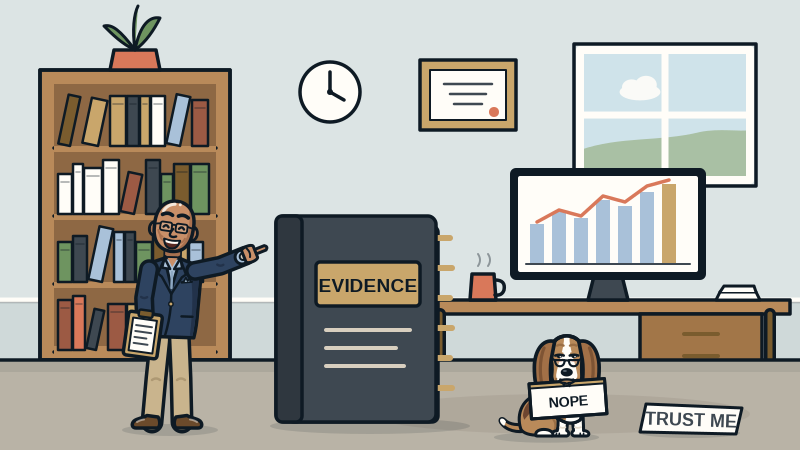
A form report puts the appraisal into standard boxes, which lenders require for most mortgages. A narrative report walks the reader through the property, the market, each comparable sale and each adjustment, with the evidence at the back. When trustees, attorneys or courts must rely on the value, the reasoning matters as much as the number.
Form reports are built for lenders, and that is fine
If your appraisal was for a mortgage, it came on a form. Fannie Mae's Selling Guide says appraisal reports must be completed on one of its forms, such as Form 1004 for a house or Form 1073 for a condo. That is changing: Freddie Mac says the redesigned report, UAD 3.6, is mandatory for all new appraisal reports submitted on or after November 2, 2026, replacing the old forms with a single data-driven, dynamic structure.
Either way, forms make sense for lenders. An underwriter may read a stack of reports before lunch. Standard fields put the same fact in the same spot every time, so a missing bathroom count jumps off the page.
Fannie Mae also says the forms do not limit or control the appraisal process. The thinking is supposed to happen whatever the paperwork looks like. The trouble is that a box has room for an answer and not much room for why.
Why "in my opinion" is not enough
"In my opinion" is how your uncle starts every sentence at Thanksgiving. It should not be how a value ends.
An appraisal is an opinion of value, so the word is not the problem. The problem is an opinion that asks to be trusted instead of checked. A $25,000 adjustment with no sales behind it is a guess with good posture.
The standards already point the other way. Under USPAP, an Appraisal Report has to summarize the information analyzed, the methods used and the reasoning that supports the conclusions. A good form report can carry that reasoning in its comments and addenda. Many do not, and the reasoning ends up as one sentence wedged into a box.
The readers who rely on private appraisals push even harder. In California, Evidence Code 802 lets an expert witness explain the reasons for an opinion and the matter it is based on, and the court may require that foundation before the opinion comes in. A report that already shows its work is ready for that question. A report that says "trust me" is not.
What a narrative report walks you through
Most of my private work is written as a narrative report. Here is what that means in practice:
- The property, as observed. What was seen, measured and rated: materials, room counts, systems, condition and quality. Facts first, ratings second, with the record each rating rests on.
- The market, measured. Which way prices moved and how fast, read from the most recent window the sales support instead of a lazy 12-month average.
- Every comparable, walked through. Its full address, why it was chosen and how it differs from the house.
- Every adjustment, with its source. What buyers in that market paid for the difference, shown with the paired sales it came from. Paired sales are two sales that differ mainly in one feature, so the price gap shows what that feature is worth.
- The conclusion, explained. Why the value lands where it does inside the range of adjusted sales.
- The evidence at the back, so anyone can check the work without calling me.
The goal is a report that teaches the market. You should finish it knowing why the number is the number, as well as what it is.
When each type is used
| Purpose | Usual format |
|---|---|
| Conventional mortgage, purchase or refinance | Lender form (UAD 3.6 for new reports from November 2, 2026) |
| Other loan programs and private lenders | Whatever the lender requires; ask before ordering |
| Date-of-death, estate and trust work | Narrative is common and well suited |
| Divorce, partition and other litigation | Narrative, built to be read by both sides |
| Pre-listing and pricing decisions | Either; narrative explains more |
Tax work is a good example of why reasoning matters. For a gift of real estate, IRS regulations say an appraisal used to adequately disclose the gift must include a description of the appraisal process, the information considered, and the reasoning that supports the analyses, opinions and conclusions. That is a federal agency asking for the work as well as the answer. Your CPA or estate attorney decides what your filing needs, so ask them before you order.
You can see how I set up each type of report on the services page.
Who gets the most out of a narrative report
A lender reads an appraisal to decide whether to make a loan. Private clients read it to make a decision they have to defend to someone else. That is the difference.
- Trustees and executors answer to beneficiaries, and sometimes to a court. A report they can explain line by line protects them.
- CPAs and estate attorneys need a value with a clear effective date and support for the basis on the return.
- Family law and litigation attorneys need a report that holds up when the other side reads it hunting for a weak spot.
- Families dividing a house need to see that the number came from the market, not from whoever ordered the report.
- Agents and sellers pricing a listing need to know what each feature is worth in that market, not a citywide average.
When people on opposite sides of a table can follow the same evidence, the argument shrinks to the parts that are actually arguable. That is cheaper for everyone.
What to ask before you order a private appraisal
- Who will read it? Tell the appraiser if a court, the IRS, a trustee or the other side will rely on it.
- Is it a form or a narrative? Ask for a sample with private details removed.
- Does every adjustment show the sales it came from? If the answer is "experience," keep shopping.
- How is the market trend measured, and how recent is the window?
- What is the effective date? For an estate or divorce it may be a date in the past.
- Where is the supporting evidence? It should be in the report, not in a file nobody sees.
For help reading any report, form or narrative, see how to read your appraisal report. Facts over feelings, and reasons over "trust me."
Key takeaways
- Lender appraisals use standard forms; UAD 3.6 is mandatory for new reports submitted on or after November 2, 2026.
- USPAP requires an Appraisal Report to summarize the information analyzed and the reasoning, whatever the format.
- A narrative report walks through the property, each comp and each adjustment, with the evidence at the back.
- Trustees, attorneys, courts and families benefit most, because they have to defend the number to someone else.
- Before you order, ask who will rely on the report and whether every adjustment shows its sales.
Get the best posts once a week.
Priced Right is one email a week with the most useful appraisal and pricing posts and what the market is doing. Never more than one a week. Unsubscribe anytime.
People also ask
Is a narrative appraisal more accurate than a form appraisal?
Not by itself. Accuracy comes from the sales and the analysis. A narrative gives the appraiser room to show that analysis, which makes it easier for you to check.
Can I use a narrative appraisal for a mortgage?
Usually not for a conventional loan. Fannie Mae requires its forms, and lenders order their own appraisals. Private lenders set their own rules, so ask first.
Does a narrative report cost more?
Often it does, because it takes more time to write and support. Ask for a quote based on the purpose and the property.
Sources
- Fannie Mae Selling Guide B4-1.2-01: Appraisal Report Forms and Exhibits
- Freddie Mac: UAD and Forms Redesign FAQs
- 26 CFR 301.6501(c)-1(f)(3): Appraisal requirements for adequate disclosure of gifts
- California Evidence Code section 802: Statement of basis of opinion
- Working RE: Understanding USPAP, Part Three: Standard 2 reporting
Got a question we haven't answered?
Suggest a topic or ask your own appraisal question. The best ones become posts.