Is your neighbor's sale a comp? Not until it's adjusted.
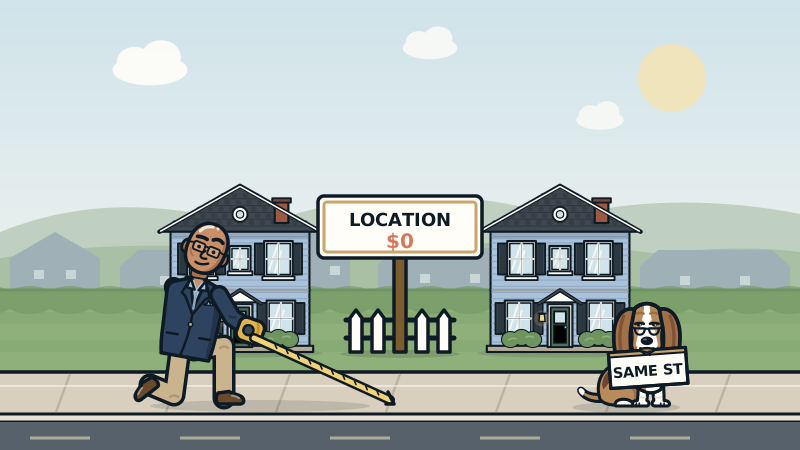
Often it is the best comp you have, but it is not your value. The neighbor's sale still gets adjusted for differences in the house itself, like size, condition, bedrooms and lot. What it should not get is a location adjustment, because it shares your location. Same street, same pocket, same location line.
Next door is a great comp, not a price tag
Every seller has the same thought when the neighbor sells: "They got that much? Mine is nicer." Sometimes that is true. Sometimes the neighbor has a remodeled kitchen and the seller has a kitchen that last saw daylight during the Clinton years.
The house next door shares almost everything that is hard to measure: the school, the street noise, the view of the same hill, the same walk to the same park. That makes it a strong comparable sale (comp). Fannie Mae's own rule says sale activity from within the neighborhood is the best indicator of value, and that comps from the same location should reflect the same location strengths and weaknesses.
But a strong comp still has to be adjusted. Two houses side by side can differ in size, bedrooms, baths, condition, garage, pool and lot. Each of those gets measured and adjusted. The neighbor's price is a starting point, not a verdict.
Why the house next door never takes a location adjustment
A location adjustment covers what buyers pay for where a house sits: the street, the noise, the traffic, the park across the way, the power lines out back. On the standard lender report, each sale's location is rated neutral, beneficial or adverse, with factors like busy road, park or water front.
Your neighbor sits in the same place you do. Same street, same traffic, same everything. So the location line between you is zero. If I ever see a report where the next door sale gets a location adjustment, my first question is simple: how is the house next door in a different location?
That does not mean every difference between the two lots disappears. If one lot is bigger, that goes on the site line. If one has a view the other does not, that goes on the view line. The rule I follow is that an adjustment goes on the row that names it. Mixing a lot difference into the location line makes the report harder to read and easier to argue with.
Location tiers and street pockets, in plain words
Most neighborhoods are not one location. They are a handful of little pockets. The quiet loop by the park. The streets near the school. The row that backs to the busy road. Buyers know these pockets, even if nobody draws them on a map.
I group streets into tiers based on what buyers actually paid there. A tier is just a group of streets where the sales say location is worth about the same. A sale in the same tier as your house takes no location adjustment. A sale from a stronger or weaker tier does, and the size comes from measured sales, not a feeling.
Some streets are too thin to measure. Maybe only one house sold there in two years. That street does not get its own made-up number. It inherits the tier of the pocket it sits in. And here is the part that keeps things honest: the same rule applies to your house and to every comp. If your quiet side street joins the park pocket, so does the comp three doors down on the same side street.
Busy street, quiet street: a hypothetical
Say your house sits on a quiet cul-de-sac. Hypothetically, three recent sales:
- Next door, on the same cul-de-sac. No location adjustment. It gets adjusted only for differences in the house, like an extra bathroom or a bigger lot.
- One street over, also quiet, in the same pocket. Same tier, so still no location adjustment.
- Around the corner, fronting a four-lane road. Different tier. Buyers usually pay less to live on a busy road, so this comp gets adjusted up to match your quieter location. How much depends on local sales.
That direction trips people up. Adjustments go on the comp, not your house. The comp on the busy road sold for less because of the road, so it gets bumped up to stand in for a house on your quiet street. I wrote more about measuring that in this post on busy streets.
Flip it around. If you live on the busy road and the neighbor on the same busy road sold, there is still no location adjustment. Same road, same honking.
How to use the neighbor's sale when you price a listing
- Get the facts on the neighbor's house. Size, bedrooms, baths, condition, updates, lot, garage. Photos and remarks from the listing help a lot.
- Check the terms. Seller credits, a quick sale to a relative or an unusual deal can bend the price. Find out before you lean on it.
- List the differences, one per line. Size goes on size. Condition goes on condition. Lot goes on site. Do not stuff them into location.
- Leave location at zero for any sale on your street or in your pocket.
- Look for a second and third sale nearby. One great comp is a gift. Three that agree are a case.
- Send it to the appraiser through the proper channel with the reasons it is a good match.
What I see in the field
I see two habits that cause trouble. The first is treating the neighbor's sale as the value with no adjustments at all. "They sold for that, so we will too" ignores the fact that their house had a new roof and yours has a tarp.
The second is the reverse: a comp next door with a location adjustment on it, usually because someone used the location line as a junk drawer for everything that did not have a home. A bigger lot, a better view, a nicer remodel. Those are real differences, and they belong on their own lines where a reader can see them.
The best reports I read are boring on this point in the best way. The next door sale shows zero on location, clear adjustments for the house, and a short note saying why.
Key takeaways
- A sale next door is often the strongest comp, but it still gets adjusted for differences in the house.
- A sale on your street or in your pocket takes no location adjustment.
- Lot size, view and condition differences go on their own lines, not the location line.
- Streets too thin to measure inherit the location tier of their pocket, for the subject and every comp alike.
- Adjustments go on the comp, so a comp on a busier street is usually adjusted up to match a quieter subject.
Get the best posts once a week.
Priced Right is one email a week with the most useful appraisal and pricing posts and what the market is doing. Never more than one a week. Unsubscribe anytime.
People also ask
Does the appraiser have to use my neighbor's sale?
No. The appraiser picks the sales that best match your house. A next door sale is often used, but a very different house or an unusual deal may be a weaker comp than one a few blocks away.
Can a comp from another neighborhood be used?
Yes. Fannie Mae allows sales from competing neighborhoods, but the appraiser must say so, address the differences and make location adjustments if warranted.
What if my neighbor's house backs to the busy road and mine does not?
The location line still stays at zero, because you share the street. A lot-specific influence like backing to a road goes on its own site line, and only if local sales show buyers pay differently for it, with the reason written out.
Sources
Got a question we haven't answered?
Suggest a topic or ask your own appraisal question. The best ones become posts.