How does a Williamson Act contract affect land value in California?
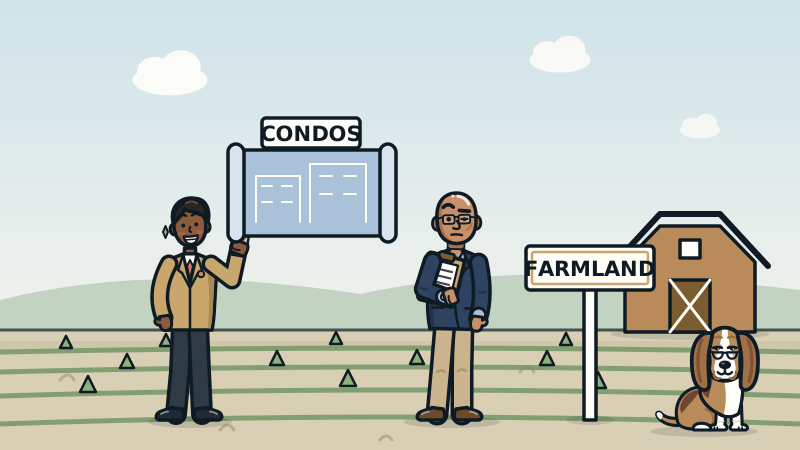
Under California's Land Conservation Act, known as the Williamson Act (Government Code section 51200 and following), land under contract is taxed on its farm income in exchange for staying in agricultural use. The contract runs with the land, so a buyer inherits it. Appraisers value the land subject to the contract, which limits use until nonrenewal or cancellation ends it.
What a Williamson Act contract actually is
The California Land Conservation Act of 1965, better known as the Williamson Act, is a deal between a landowner and a county or city. The owner agrees to keep the land in farming or open space. In return, the property tax is based on what the land earns as a farm, not what a developer might pay for it.
The basics, from the California Department of Conservation:
- The minimum contract term is 10 years. Some places set longer terms, up to 20.
- Contracts renew automatically every year unless someone starts nonrenewal. The clock never runs down on its own.
- An agricultural preserve generally has to be at least 100 acres, though smaller preserves are allowed in some cases.
- Commercial farming is generally allowed. Other compatible uses may be allowed with a use permit.
- The contract runs with the land and binds every later owner.
This is not a niche program. The Department's 2022 report says 52 of California's 58 counties have executed contracts, and more than 16 million acres of farm and ranch land have taken part. If you are shopping for acreage in the Central Valley, odds are decent you will meet one. It will not introduce itself at the showing.
How the property tax break works
The tax side lives in Revenue and Taxation Code section 423. The county assessor values contracted land by capitalizing its income, meaning a value built from what the land can earn in farm use. By law, the assessor does not use sales data for this.
The State Board of Equalization explains that contracted land is assessed at the lowest of three values: the restricted income value, the current market value, or the Prop 13 factored base year value. In most cases the restricted value is the lowest.
The Department of Conservation estimates owners save 20 to 75 percent on property tax each year. That range is theirs, and your number depends on your land and your county.
Here is the part people mix up. The assessed value on a Williamson Act tax bill is not market value. It was never meant to be. It is a tax number built from farm income on purpose. For more on why tax values and appraisals differ, see appraised value vs assessed value in California.
Getting out: nonrenewal versus cancellation
There are two exits, and one of them is much more expensive.
Nonrenewal is the route the Department recommends. The owner or the county files a notice of nonrenewal, which starts a 9-year wind down. The contract stops renewing, property taxes step up each year toward the normal level, and the contract ends when the period is over. Farmland Security Zone contracts, a 20-year version, wind down over 19 years.
Cancellation is the fast exit, and it is not guaranteed. The owner petitions, and the board of supervisors or city council can grant it only if it makes specific findings under Government Code sections 51282 and 51283. The owner then pays a cancellation fee equal to 12.5 percent of the cancellation valuation. The assessor sets that valuation as the current fair market value of the land as though it were free of the contract.
A hypothetical to show the math: if the assessor certifies a cancellation valuation of $2,000,000, the fee is $250,000. That is before any planning costs. This is a legal process with real money at stake, so talk to a land use attorney and your CPA before you count on it.
What the contract does to market value
An appraiser values the property as it legally exists on the effective date. For contracted land, that means subject to the contract. A buyer is not buying a future subdivision. They are buying farmland held to farm use until the contract ends. If nobody has filed nonrenewal, that end is at least nine years away.
That changes the comps. The best evidence is sales of other contracted land with similar soil, water, size and use. Sales of unrestricted land can still help, but the difference between restricted and unrestricted land has to be measured from sales, not guessed. A buyer who plans to farm may barely care. A buyer who wanted to build may walk.
Notice there can be two very different numbers on the same parcel:
- Market value subject to the contract. What a buyer would pay today for the land with the contract in place.
- Cancellation valuation. The assessor's value as if the contract did not exist, used only to set the fee.
Mixing those up is how a seller ends up quoting a developer's price per acre for land that legally has to grow almonds for another decade.
What I see in the field
Facts over feelings. The feeling I hear most is "land around here goes for X per acre." Maybe it does, for land without a contract and with a road, water and a zoning map that cooperates. Contracted land is a different product.
Rural sales are thin, so I go back in time before I go farther away. An older sale of similar contracted land, adjusted to today's market, can tell me more than a fresh sale of unrestricted land on the edge of town. I explain that in how an older sale is adjusted to today.
I also check whether a notice of nonrenewal was filed and when. Land that is six years into a nine-year wind down is closer to freedom than land whose contract renewed again this year. Buyers notice that difference, and the sales usually show it.
Checklist for buyers and sellers
- Ask county planning whether the parcel is under a Williamson Act or Farmland Security Zone contract.
- Get a copy of the contract. Contracts are recorded with the county recorder, so a title search should find it.
- Ask if nonrenewal was filed, by whom and on what date.
- Read the allowed uses and the county's local rules before you plan a second home, a winery or an event barn.
- Look at the tax bill with care. Expect taxes to rise during nonrenewal, and plan the budget for it.
- Tell the appraiser about the contract up front so the comps match the legal reality.
- Bring in your attorney and CPA before any cancellation plan.
For an estate, a trust, a partnership split or a purchase decision, a private appraisal can value the land subject to the contract with the evidence laid out.
Key takeaways
- A Williamson Act contract runs with the land and binds the next owner.
- Contracts last at least 10 years and renew every year until nonrenewal starts a 9-year wind down.
- Cancellation needs board findings and a fee of 12.5 percent of the assessor's unrestricted value.
- The farm-income tax value is not market value, and neither is the cancellation valuation.
- Market value is appraised subject to the contract, using sales of similar contracted land when possible.
Getting this answered in California
The Department of Conservation's regional tables show large Williamson Act enrollment in the San Joaquin Valley and the Bay and Central Coast regions. I am a California Certified Residential Appraiser (License AR041465) and appraise homes statewide, including Fresno County, San Joaquin County, Stanislaus County, Monterey County, Sonoma County. See every area I serve.
Get the best posts once a week.
Priced Right is one email a week with the most useful appraisal and pricing posts and what the market is doing. Never more than one a week. Unsubscribe anytime.
People also ask
Does a Williamson Act contract lower land value in California?
It can, because the contract limits the land to farm or open space use for years. How much depends on the buyers in that market. The difference has to be measured from sales of contracted and unrestricted land, not assumed.
Can I get out of a Williamson Act contract early?
The usual exit is nonrenewal, which takes 9 years. Cancellation is faster but requires findings by the board of supervisors or city council and a fee of 12.5 percent of the land's unrestricted value. Talk to a land use attorney before planning on it.
Does a Williamson Act contract transfer when you sell the land?
Yes. The contract runs with the land and binds every later owner. A buyer takes over the contract, including any nonrenewal period already under way.
How is Williamson Act land taxed in California?
Under Revenue and Taxation Code section 423, the assessor values it from the income the land can earn in farm use. It is assessed at the lowest of that restricted value, current market value or the factored base year value, and the restricted value is usually the lowest.
Sources
- California Department of Conservation: Land Conservation (Williamson) Act Questions and Answers
- California Department of Conservation: Williamson Act Cancellation Process
- California State Board of Equalization: California Land Conservation Act
- California Department of Conservation: 2022 Williamson Act Status Report
- California Government Code section 51283 (cancellation fee)
Got a question we haven't answered?
Suggest a topic or ask your own appraisal question. The best ones become posts.