Can AI replace your appraiser?
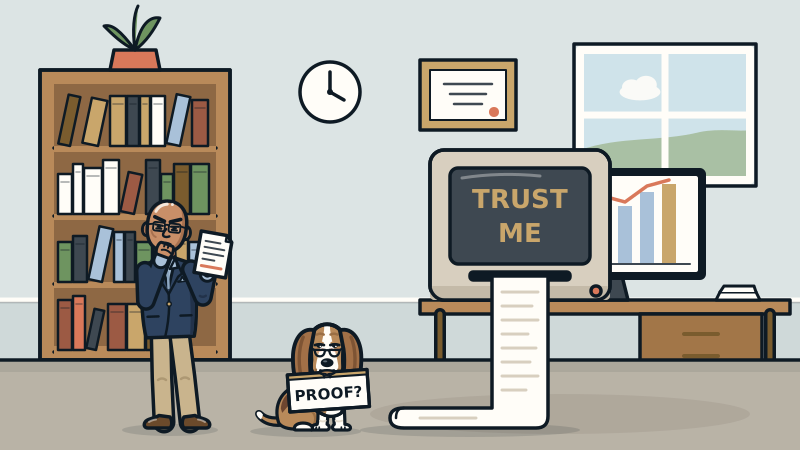
Not fully. Automated valuation models already estimate values fast, and Fannie Mae lets some loans skip the appraisal. But a model only knows what the records say. It cannot see condition, unrecorded remodels, views or a bad layout, and it cannot explain or defend each adjustment the way a licensed appraiser must.
What a computer value actually is
A computer that guesses home values has a boring official name: an automated valuation model, or AVM. Federal regulators define it as a computerized model that mortgage lenders and loan buyers use to estimate the value of a home that secures a mortgage. The online estimate on your phone works on the same basic idea.
The model takes in public records, past sales, listing data and market trends. Then it does math on all of it at once and spits out a number. Zillow, for example, says its Zestimate uses county and tax assessor records and direct feeds from listing services. Zillow also says, in plain words, that the Zestimate is not an appraisal and can't be used in place of one.
That is an honest label. I respect it. It is more honesty than I get from the uncle at Thanksgiving who "just knows" what your house is worth.
What the models do really well
I will give the computers their due. They are fast, they never get tired, and they don't need a parking spot.
- Volume. A model can value a whole county before I finish my coffee.
- Look-alike houses. In a tract where the homes are near copies and sales happen every week, the math has a lot to work with.
- Spotting trends. Models are good at noticing that prices in an area moved, and roughly how much.
- Screening. Lenders use them to flag files that look odd and need a closer look.
I use technology like this every day. Measuring the market with lots of sales is how I do my job. The question is not "computer or human." It is who checks the computer's homework before someone borrows real money against it.
Where the computer still misses
A model only knows what the records say. If the records are wrong or out of date, the model starts from the wrong place and never knows it.
- Condition. A gut remodel and a house untouched since disco look the same in public data. Buyers do not treat them the same. In the markets I work, buyers react to condition more than age.
- Work the county never saw. New kitchen, new roof, an added bath. Or the opposite: an addition built without a permit.
- View and setting. A bay view and a view of the neighbor's RV can sit on the same street.
- Layout. A bedroom you can only reach through another bedroom. Models don't walk hallways.
- The freeway. Two houses with the same size and age, one backing to a sound wall. The record does not hear the trucks.
- One-of-a-kind homes. Big lots, hillside homes and custom builds have few true matches, so the math gets shaky.
For more on how far apart online estimates and appraisals can land, see how accurate the Zestimate is.
Lenders already skip the appraisal on some loans
Here is the part that surprises people. Computers already replace the appraisal on some loans. Fannie Mae's version is called Value Acceptance. Its underwriting system offers it on certain files, and when the lender uses the offer, no appraisal is ordered.
Two details matter. First, Fannie Mae's guide says that, generally, a prior appraisal of the home must already be in its records. So even the computer usually leans on some past appraiser's work. Second, plenty of loans are left out. Fannie Mae's list of ineligible loans includes:
- Homes where the price or estimated value is $1,000,000 or more
- Two- to four-unit properties, co-ops and manufactured homes
- Proposed construction and construction-to-permanent loans
- Purchases with a gift of equity, and manually underwritten loans
In much of the Bay Area, that $1 million line covers a lot of ordinary houses. Rules differ by loan program and lender, so ask your loan officer what applies to you. I cover the trade-offs in do I always need an appraisal.
New federal rules now police the computers
Regulators noticed that more lending decisions run on computer values. Six federal agencies, including the CFPB and FHFA, issued a final rule on quality control standards for AVMs. It was published August 7, 2024, and took effect October 1, 2025.
Lenders and loan buyers that use an AVM to make certain mortgage decisions must have policies and controls designed to:
- Ensure a high level of confidence in the estimates
- Protect against the manipulation of data
- Seek to avoid conflicts of interest
- Require random sample testing and reviews
- Comply with applicable nondiscrimination laws
Notice what the rule assumes. Computer values need checking, testing and someone accountable. The rule also says it does not cover a certified or licensed appraiser developing an appraisal. Appraisers already answer to their own standards and their license. Mine is California Certified Residential Appraiser, License AR041465, and the state knows where to find me. Nobody has ever filed a complaint against a spreadsheet.
What I see in the field, and when you want a human
I have blended data science with human insight for almost two decades, long before anyone called it AI. Technology finds the sales and measures what the market pays for each difference. Then a person has to look at the house, decide which sales really compete with it, and explain each adjustment in plain words. If I can't defend an adjustment to a lender, a judge or a skeptical heir, it doesn't go in the report.
A computer value is a fine starting point. Get a real appraisal when:
- The house is unusual: a big lot, a view, an ADU, a remodel or an addition
- Money depends on the number: an estate, a trust, a divorce, a family buyout
- You are pricing a listing and need evidence buyers and their agents can check
- The online number and your gut disagree by a lot
If you don't need a site visit, my desktop appraisal uses the facts and photos you send plus records and market data. Facts over feelings. Also facts over formulas.
Key takeaways
- Computer values (AVMs) are fast and useful, but they only know what the records say.
- Condition, unrecorded work, views, layout and noise are where models miss most.
- Fannie Mae can skip the appraisal on some loans, but not on homes valued at $1 million or more.
- Since October 1, 2025, lenders using AVMs for certain decisions must follow federal quality control standards.
- A good appraisal explains and defends every adjustment, which a number on a screen does not.
Get the best posts once a week.
Priced Right is one email a week with the most useful appraisal and pricing posts and what the market is doing. Never more than one a week. Unsubscribe anytime.
People also ask
Do appraisers use AI or computer models?
Many do, for finding sales and measuring market trends. The appraiser still has to pick the comparable sales, check the house and support every adjustment in the report.
Is an AVM the same as a Zestimate?
They work on the same idea. AVM is the general term for any computer model that estimates a home's value. A Zestimate is one consumer version, and Zillow says it is not an appraisal.
Can I ask for an appraisal if my lender offers to skip it?
Usually you can ask. Talk to your loan officer first about the cost, the timeline and whether ordering one changes the offer.
Sources
Got a question we haven't answered?
Suggest a topic or ask your own appraisal question. The best ones become posts.