Full, desktop or hybrid appraisal in California: what's the difference?
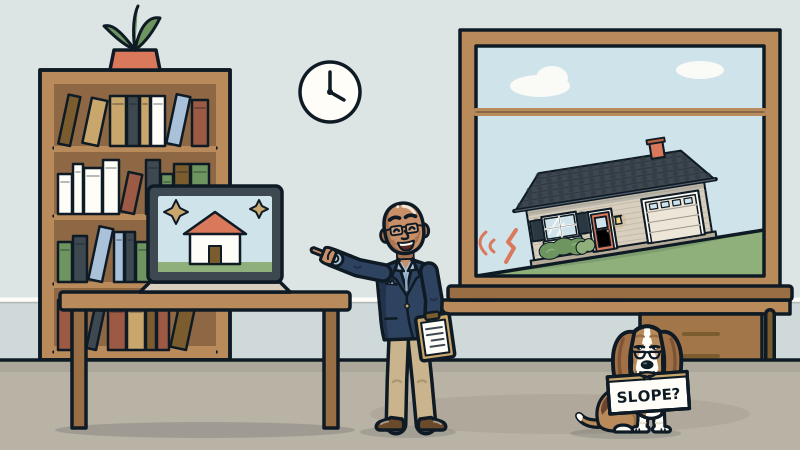
In California, a full appraisal means the appraiser inspects the home inside and out. A desktop appraisal has no visit and relies on records, MLS data, photos and owner information. In Fannie Mae's lender hybrid, a trained third party collects the data and the appraiser analyzes it. A desktop can be relatively accurate, but it cannot feel a sloping floor.
Here are the four ways to look at a house, side by side
Every appraisal uses the same core work: comparable sales (comps, meaning similar homes that sold nearby), adjustments for the differences, and a signed opinion of value. What changes is how the appraiser learns about the house itself.
| Type | Who sees the house | Where the facts come from |
|---|---|---|
| Full appraisal | The appraiser, inside and out | The appraiser's own inspection and measurements, plus records |
| Exterior-only (drive-by) | The appraiser, from the street | What the appraiser can see outside, plus records for the interior |
| Desktop | Nobody visits | Public records, MLS history and photos, and information from the owner or agent |
| Hybrid (lender version) | A trained third-party data collector | The collector's interior and exterior data, which the appraiser analyzes |
One note on my own practice. For private clients at ValuedAudit, desktop and hybrid are the same product, and neither one needs a site visit. You supply the property details, photos if you have them, and the pros and cons you know about. I put that together with records, market data and the technology and methods I use on every file. The lender version, where someone comes to the door, is covered in what a hybrid appraisal is.
The pandemic moved appraisers out of the living room
Before 2020, a mortgage appraisal almost always meant an appraiser in your hallway. Then nobody wanted a stranger in the hallway.
- March 23, 2020. Fannie Mae's Lender Letter LL-2020-04 allowed desktop appraisals on purchase loans when an interior inspection was not available. It allowed exterior-only appraisals on purchases and on limited cash-out refinances of loans Fannie Mae already owned. Cash-out refinances still needed a traditional appraisal.
- March 27, 2020. HUD's Mortgagee Letter 2020-05 let most FHA purchases use an exterior-only or desktop-only scope, and some FHA refinances use exterior-only. Cash-out refinances were left out.
- May 31, 2021. After several extensions, Fannie Mae's temporary flexibilities ended for loans with application dates after that day.
- Weekend of March 19, 2022. Fannie Mae made desktop appraisals a regular option for certain purchases of one-unit principal residences at 90% loan-to-value or less, when its Desktop Underwriter system offers it.
- March 1, 2023. Fannie Mae announced hybrid appraisals, built on a property data collection by a vetted third party, and "value acceptance + property data," which skips the appraisal but still sends someone to collect facts. It said it was "moving away from implying that an appraisal is a default requirement."
The emergency rules ended. The habit did not. The current lender rules are in when a desktop or hybrid fits a loan.
What technology lets an appraiser see from a desk
A lot, honestly. Here is what I can pull up without leaving my chair:
- MLS history. Every time the house was listed, with the photos, the remarks and the price changes.
- Public records. Lot size, year built, recorded square footage, permits in some cities, and past sales.
- Aerial and street imagery. Roof shape, pool, solar panels, the shed nobody mentioned, and what is across the street.
- Property data reports. Facts and photos collected by someone who did visit, when one exists.
- Video walkthroughs and owner photos. Fannie Mae's own desktop rules allow virtual inspection tools such as photos and videos, and machine-generated floor plans, as long as the appraiser confirms the information is reliable.
Put together, that can be relatively accurate when the information is good. My method blends data science with human insight. I have taught and practiced it for almost two decades, long before AI showed up and started guessing at home values.
The weak spot is the word "good." Listing photos are shot by people paid to make a closet look like a ballroom. A wide-angle lens has never once made a room smaller.
What I will never know from a desk
With the owner or agent giving me honest pros and cons, I can get close. But I will never know that the left side of the house slopes in the back.
That slope might mean settling. It might mean water runs toward the foundation every winter. Inside, it might be a floor where a marble rolls to the corner by itself. None of that shows up in a listing photo shot level from the doorway.
Here is what else a desk cannot pick up:
- The smell. Pets, smoke, a damp crawl space. Photos don't have noses.
- The noise. The freeway at rush hour, whether it is the 405 or the 880. Photos don't have ears either.
- The soft spot in the floor by the tub that you have learned to step around.
- The neighbor's barking dog, who is calm in every photo because the photo took one second.
- The view. "Peek of the hills" sometimes means a lovely stucco wall with a hill behind it.
So the value rests on the information. On a private desktop, I write that down plainly. The professional name is an extraordinary assumption. USPAP, the national appraisal standards, describes it as an assumption about uncertain information that, if it turns out false, could change the appraiser's conclusions. In plain words: "I'm relying on this being true." Fannie Mae's lender desktop does not allow those assumptions about the property, which is one reason a lender desktop needs solid data from the start.
How to make a desktop appraisal accurate
If you are the owner or the agent, you are my eyes. Here is what to send:
- A short pros and cons list. New roof, quiet street, great light. Also the busy corner, the steep driveway, the bedroom that only fits a twin bed.
- Recent updates with dates. Kitchen 2019, windows 2022, water heater last spring. Permits if you have them.
- Known defects. Cracks, leaks, sloping floors, a drainage problem, anything a buyer's inspector would find in an hour.
- Photos of every room and the yard. Phone photos are fine. Include the side yards and the back of the house, because that is where slopes and drainage problems hide.
- Anything detached. An ADU, a converted garage or a cottage is valued on its own line, never added to the main house's square footage.
The flaws matter most. Leaving out the crack in the garage slab does not make the crack go away. It just makes the value wrong in a way that shows up later, usually at the worst possible moment, like escrow. More on what a desktop needs is in what a desktop appraisal is.
Which one should you choose?
Match the scope to what the number has to survive.
- Estates and date-of-death values. A desktop often works when the family knows the house and has photos from around that date. If nobody has been inside in years, a visit is worth it.
- Divorce. If both sides agree on the facts about the house, a desktop can work. If they argue about condition, get a full inspection so the facts are not part of the fight.
- Pre-listing planning. A desktop is a solid way to price with evidence before the sign goes up.
- Insurance. A desktop can help with planning, but insurance replacement cost is not the same as market value, so ask your insurance agent what they need.
- Litigation. When the number will be fought over in a deposition, a full inspection is usually safer. "I never saw the house" is a long afternoon under cross-examination.
- Loans. The lender's rules decide, not you and not me.
For legal and tax questions, your attorney or CPA has the final word on what the assignment needs. You can see the private desktop and full options on my services page, and I work across California.
Key takeaways
- A full appraisal is a visit inside and out. A desktop has no visit. A lender hybrid sends a data collector instead of the appraiser.
- The pandemic pushed lenders to allow desktop and exterior-only work, and Fannie Mae kept a permanent desktop option starting in March 2022.
- A desktop can be relatively accurate when the information is good, but it can't feel a slope, smell a crawl space or hear the freeway.
- Send a pros and cons list, dated updates, known defects and photos of every room and the yard.
- When the value will be fought over, a full inspection is usually the safer choice.
Getting this answered in California
Sloping lots and hillside drainage, the things a desktop cannot see, come up often in hillside neighborhoods like the Oakland and Berkeley hills, Marin and the Los Angeles hillsides. I am a California Certified Residential Appraiser (License AR041465) and appraise homes statewide, including Alameda County, Contra Costa County, Marin County, Los Angeles County. See every area I serve.
Get the best posts once a week.
Priced Right is one email a week with the most useful appraisal and pricing posts and what the market is doing. Never more than one a week. Unsubscribe anytime.
People also ask
Is a desktop appraisal accurate in California?
It can be relatively accurate when the property information is good, because the comps and market analysis are the same work. The risk is what nobody reported, like a sloping floor or a drainage problem. Honest photos and a pros and cons list close most of that gap.
Are desktop appraisals still allowed after COVID?
Yes. Fannie Mae's temporary pandemic flexibilities ended for loans with application dates after May 31, 2021, but Fannie Mae made desktop appraisals a regular option in March 2022 for certain purchases of one-unit principal residences at 90% loan-to-value or less. Private desktop appraisals for estates, divorce and planning follow the assignment, not a loan program.
What is the difference between a hybrid and a desktop appraisal?
In the lender version, a hybrid sends a trained third party to collect interior and exterior data, and the appraiser analyzes it. A desktop has no visit at all. At ValuedAudit, private desktop and hybrid appraisals are the same product, with no site visit.
Should I get a full appraisal for a court case in California?
Usually, yes. When a value will be challenged in a divorce, partition or other dispute, an appraiser who inspected the house has fewer assumptions to defend. Ask your attorney what the case requires before you order.
Sources
- Fannie Mae: Temporary appraisal policies for borrowers impacted by COVID-19 (LL-2020-04, March 23, 2020)
- Fannie Mae Lender Letter LL-2021-04: Impact of COVID-19 on Appraisals (updated April 21, 2021)
- HUD Mortgagee Letter 2020-05: Exterior-Only and Desktop-Only Appraisal Scope (March 27, 2020)
- Fannie Mae Selling Guide Announcement SEL-2022-01 (desktop appraisals)
- Fannie Mae: Updates regarding valuation modernization (March 1, 2023)
- Fannie Mae Selling Guide B4-1.2-02: Desktop Appraisals
Got a question we haven't answered?
Suggest a topic or ask your own appraisal question. The best ones become posts.