How does an appraiser decide on one final value in California?
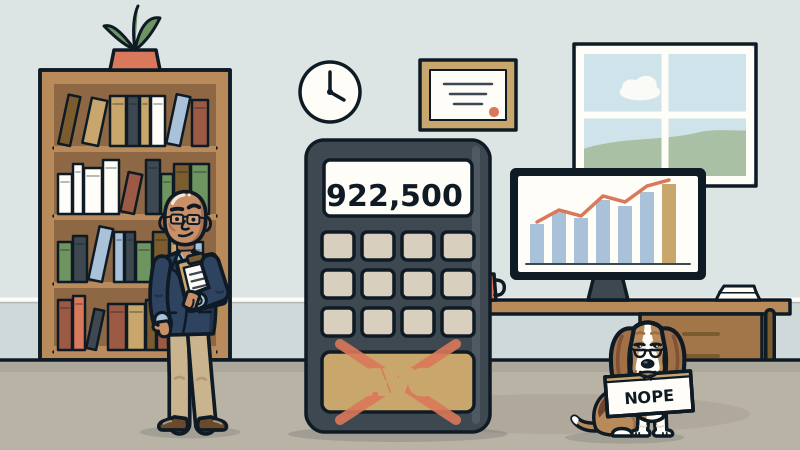
An appraiser in California reaches one final value through reconciliation: weighing the adjusted prices of the comparable sales and explaining which sales deserve the most weight and why. Fannie Mae's Selling Guide says reconciliation must never be a plain average, and the value must fall within the range of the adjusted sale prices.
Reconciliation is where the appraiser makes the call
By the time an appraiser gets to the end of a report, the hard part should be visible. Every comparable sale (a comp, meaning a similar nearby home that sold) has been adjusted to look like your house. Now there are several adjusted prices on the page, and they never match to the dollar. Real sales are messy. People are messier.
Reconciliation is the step that turns those prices into one opinion of value. Fannie Mae's Selling Guide requires the appraiser's comments to reflect the reconciliation of the adjusted values and to say why the sales given the most weight earned it. The indicated value has to fall within the range of the adjusted sale prices.
In other words, the appraiser has to show the reasoning. "Trust me" is not a reconciliation. It is a fortune cookie with a license number.
Why averaging the comps is the wrong move
The lazy way to reconcile is to add up the adjusted prices and divide. It looks neutral. It is not.
An average treats a sale on your street with almost no adjustments the same as a sale across town that needed $95,000 of corrections. It lets the weakest comp pull just as hard as the best one. That is like letting the uncle who "knows the market" cast the same vote as the house next door that sold last month.
Fannie Mae says it plainly in its section on valuation analysis and reconciliation: reconciliation must never be an averaging technique. The one exception is a weighted average, and only with a proper explanation of the weights.
So the question is never "what is the middle number?" It is "which sales tell me the most about this house, and why?"
Which comps get the most say
Here is what moves a comp up my list when I reconcile:
- Fewest and smallest adjustments. Fannie Mae notes that the best comp would ideally need no adjustment at all. Every adjustment is a place where error can sneak in.
- Most similar where buyers care most. Same pocket, same condition tier, same layout. Condition often beats age with buyers, so a match on condition can matter more than a match on year built.
- Most recent. A sale from three weeks ago knows things a sale from nine months ago does not, even after a time adjustment.
- Bracketing. I want sales above and below your house on the features that matter, so the adjustments are not all pushing one way.
- Verified. A sale I confirmed with the agent or the records beats one with a mystery seller credit.
One caution. Fannie Mae also says the number or size of adjustments should not be the only test of whether a comp is acceptable. A heavily adjusted sale can still be the best evidence for a feature nothing else shares. It just has to earn its place with support.
A hypothetical example: a 1960s ranch in Concord
Say I am appraising a hypothetical 1960s single-story ranch in Concord. It has three bedrooms, two baths and an updated kitchen. After every adjustment, four sales land like this. I list them from least adjusted to most adjusted, so you can check the order on the gross adjustment column:
| Comp | Sale price | Gross adjustments | Adjusted price | Notes |
|---|---|---|---|---|
| Sale 1 | $905,000 | $14,000 | $915,000 | Same street, sold 3 weeks ago |
| Sale 2 | $880,000 | $52,000 | $910,000 | Same tract, smaller lot |
| Sale 3 | $960,000 | $61,000 | $925,000 | Larger, newer baths |
| Sale 4 | $845,000 | $95,000 | $940,000 | Dated kitchen, sold 7 months ago |
The adjusted range is $910,000 to $940,000. A straight average is $922,500, and that number leans on Sale 4, the comp with the most corrections and the oldest date.
I would land at $915,000. Sale 1 is on the same street, needed almost nothing and is the freshest read of the market, so it gets the most say. Sale 2 brackets it from below. Sales 3 and 4 confirm the top of the range but carry more guesswork.
For comparison, a weighted approach of 50% on Sale 1, 20% each on Sales 2 and 3, and 10% on Sale 4 comes out to $918,500. Both methods point to the same neighborhood, and the report would say why the final number sits where it does. Print order and weight are separate decisions. The table is sorted by adjustment size. The weights come from the reasoning.
Weighting versus judgment inside the range
Some appraisers assign percentages to every comp. Others reach a value by judgment inside the adjusted range and explain the reasons in words. Both are legitimate. Appraisal is part numbers and part informed judgment, and the rules allow either one as long as the reasoning is written down.
What is not legitimate is starting with a number and working backward. The value has to come from the evidence. The contract price does not set it, and neither does a refinance target. If the evidence lands on the contract, fine. It got there on its own legs.
A good reconciliation reads like a short argument: here is the range, here is the sale that says the most, here is what the others add, and here is why the value sits at this spot and not $20,000 higher. If you finish reading it and still cannot tell why, that is a fair question to ask through your lender or client.
What I see in the field, and how to check a reconciliation yourself
The most common weak spot I see is a reconciliation that is one sentence long. "All comps were considered, with most weight given to Sales 1 and 2." Why? Silence. The second most common is a value that sits exactly where the contract sits, with no sale that actually supports it.
When you read your own report, check these:
- Find the adjusted range. Is the final value inside it? Fannie Mae requires that for the sales comparison approach.
- Find the most-weighted sales. Does the report say why they won?
- Look at the gross adjustments. Do the favored sales have the smallest ones? If not, is there a reason?
- Check bracketing. Are there sales both above and below your house on size, lot and condition?
- Ask about the outliers. If one comp pulls far from the rest, the report should explain what it adds.
If you need a value that walks the reader through every comp and every reason, that is how I write my narrative reports at ValuedAudit. You should be able to follow the logic without a decoder ring.
Key takeaways
- Reconciliation turns several adjusted comp prices into one value, with reasons.
- Fannie Mae says reconciliation must never be a plain average.
- The sales with the fewest adjustments, closest match and freshest dates usually get the most say.
- Weighting and judgment inside the range are both valid when the reasoning is written down.
- The final value should sit inside the adjusted range, and the report should tell you why it sits where it does.
Getting this answered in California
Fannie Mae's reconciliation rules apply to conforming loans in every California county, and this post's hypothetical example is a 1960s ranch in Concord in Contra Costa County. I am a California Certified Residential Appraiser (License AR041465) and appraise homes statewide, including Contra Costa County, Alameda County, Santa Clara County. See every area I serve.
Get the best posts once a week.
Priced Right is one email a week with the most useful appraisal and pricing posts and what the market is doing. Never more than one a week. Unsubscribe anytime.
People also ask
Do appraisers average the comparable sales?
No. Fannie Mae's Selling Guide says reconciliation must never be an averaging technique, except a weighted average with a proper explanation. The appraiser gives the most weight to the sales that tell the most about the subject home and explains why.
Can the final appraised value be outside the range of the comps?
Not for loans that follow Fannie Mae rules. The indicated value from the sales comparison approach must fall within the range of the adjusted sale prices of the comparables.
Which comparable sale counts the most in an appraisal?
Usually the one most like your home after the fewest and smallest adjustments, often the most recent and closest. Fannie Mae says the number or size of adjustments is not the only test, so the report should explain the choice.
Is it a problem if the appraisal equals the contract price?
Not by itself. A contract price is often a good market signal. The concern is only when the comps and adjustments do not actually support it.
Sources
Got a question we haven't answered?
Suggest a topic or ask your own appraisal question. The best ones become posts.